
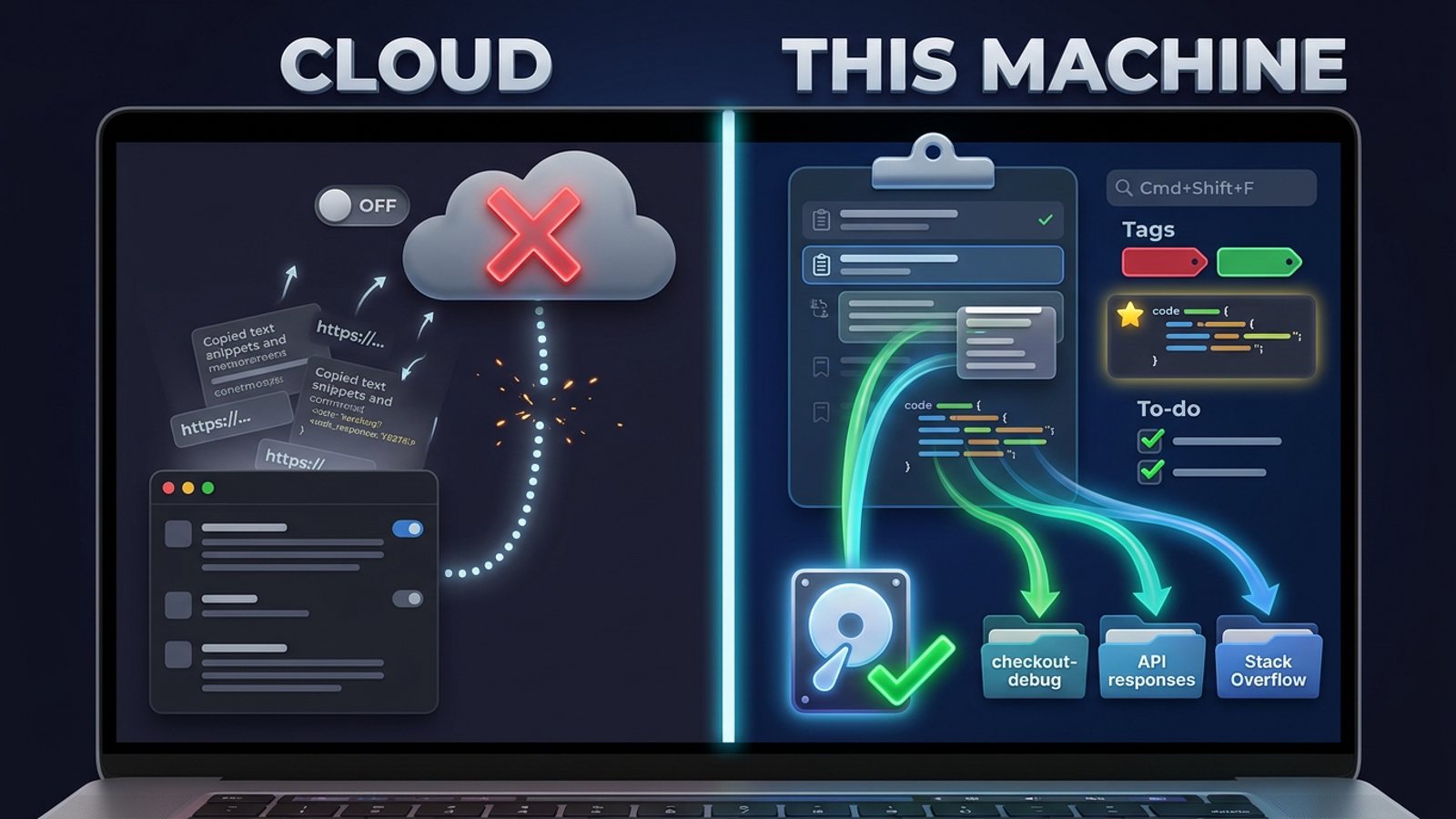
Is there a ClipAmigo alternative that works offline?
Yes. ClipAmigo is local by default, but if you want a Chrome clipboard manager where clips can never leave your machine, Clipboarder Pro keeps everything in your browser with zero servers and zero
Clipboarder Pro Blog
Guides for keeping what you copy, note and list organised and within reach.
Yes. ClipAmigo is local by default, but if you want a Chrome clipboard manager where clips can never leave your machine, Clipboarder Pro keeps everything in your browser with zero servers and zero
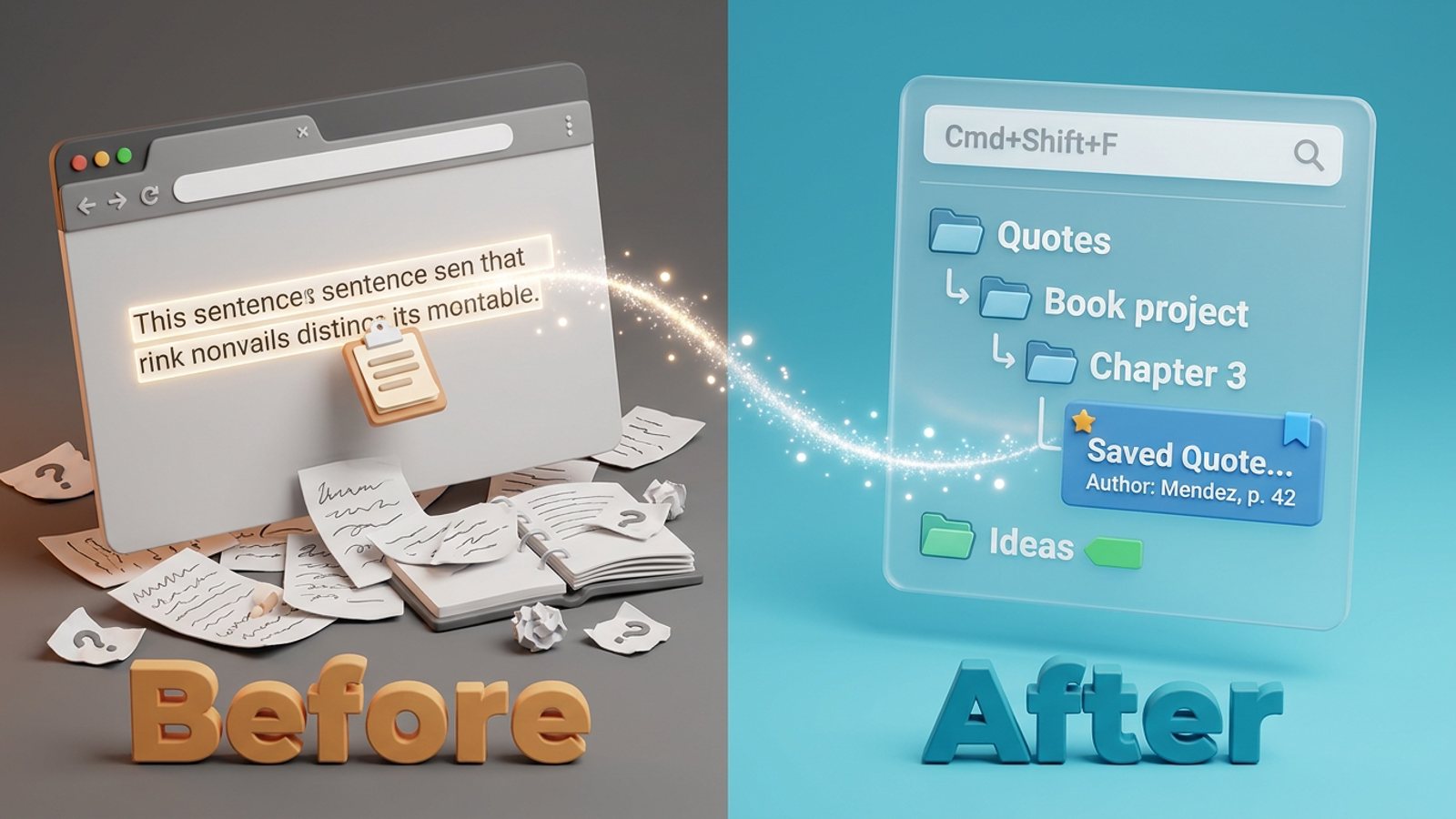
ClipStash is a crowded name shared by several tools. Here's how Clipboarder Pro, CopyQ, Ditto and Win+V compare for saving quotes, links and half-formed ideas.
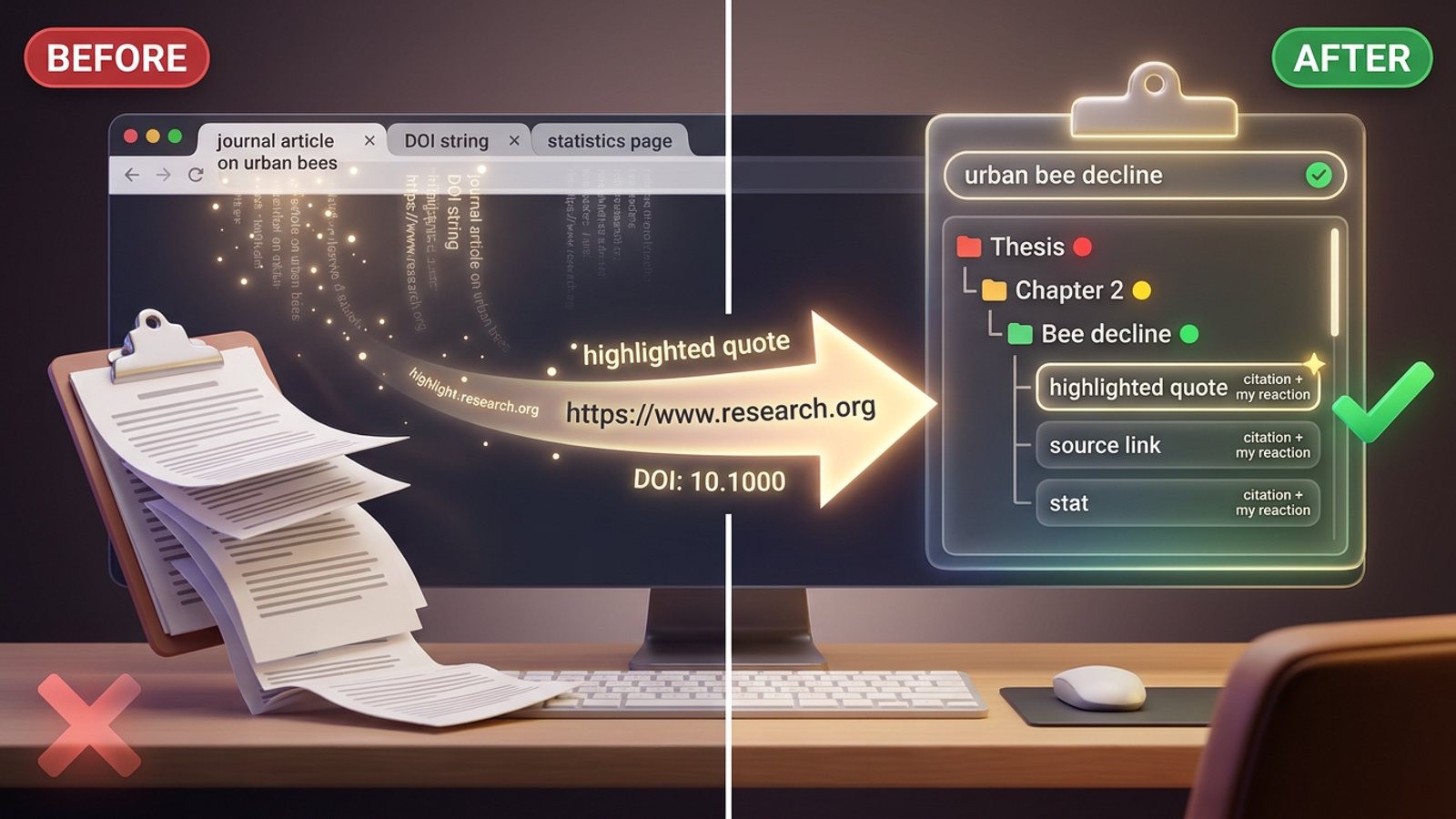
The best copy history alternatives for students and researchers, compared honestly: Zotero for citations, Keep and Notion for notes, and a Chrome clipboard manager that files every copy next to the
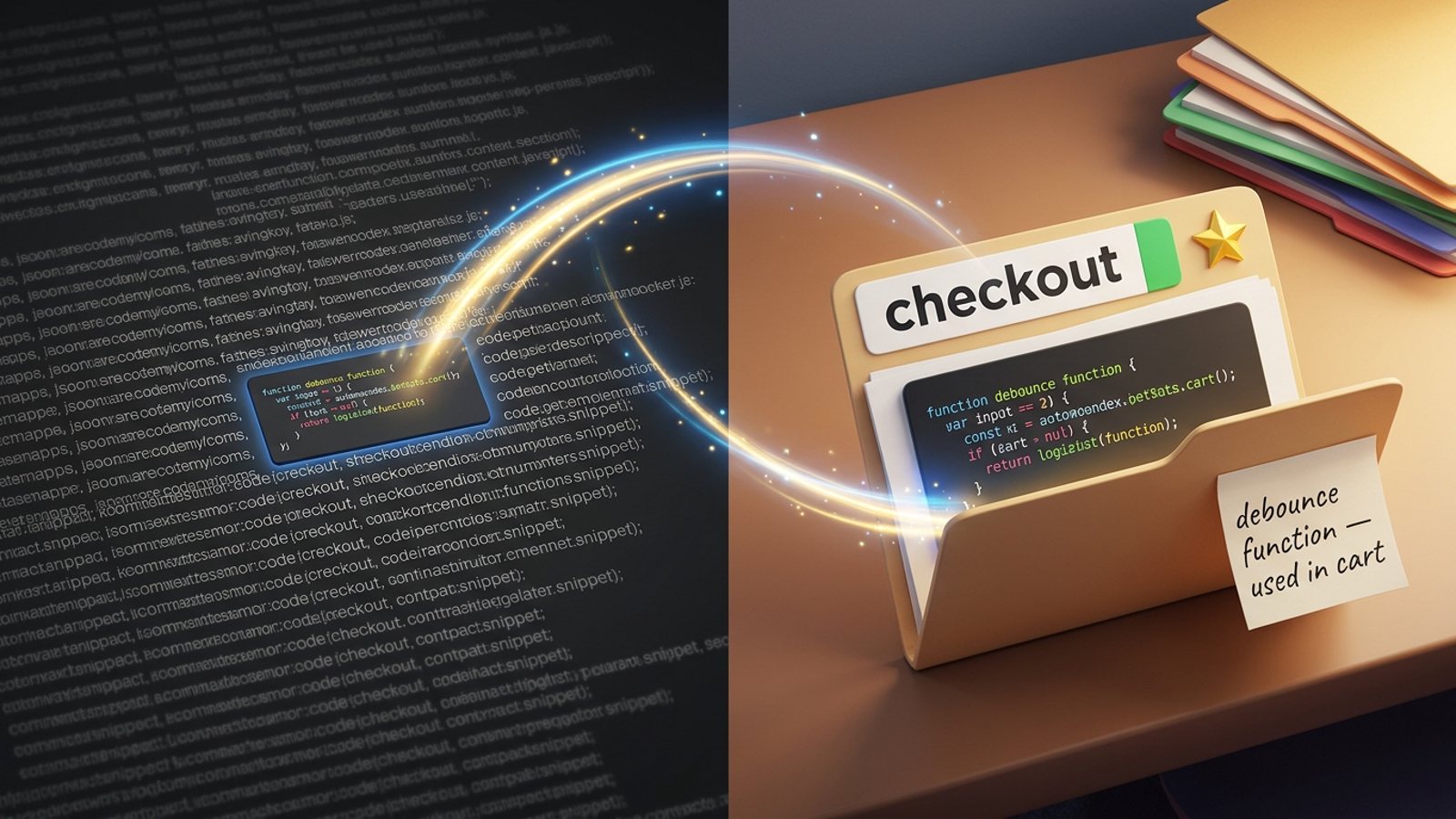
Copy History + wins on scale and export; ClipAmigo wins on code filtering and free encryption. For filing snippets into folders with notes, Clipboarder Pro is the honest fit.
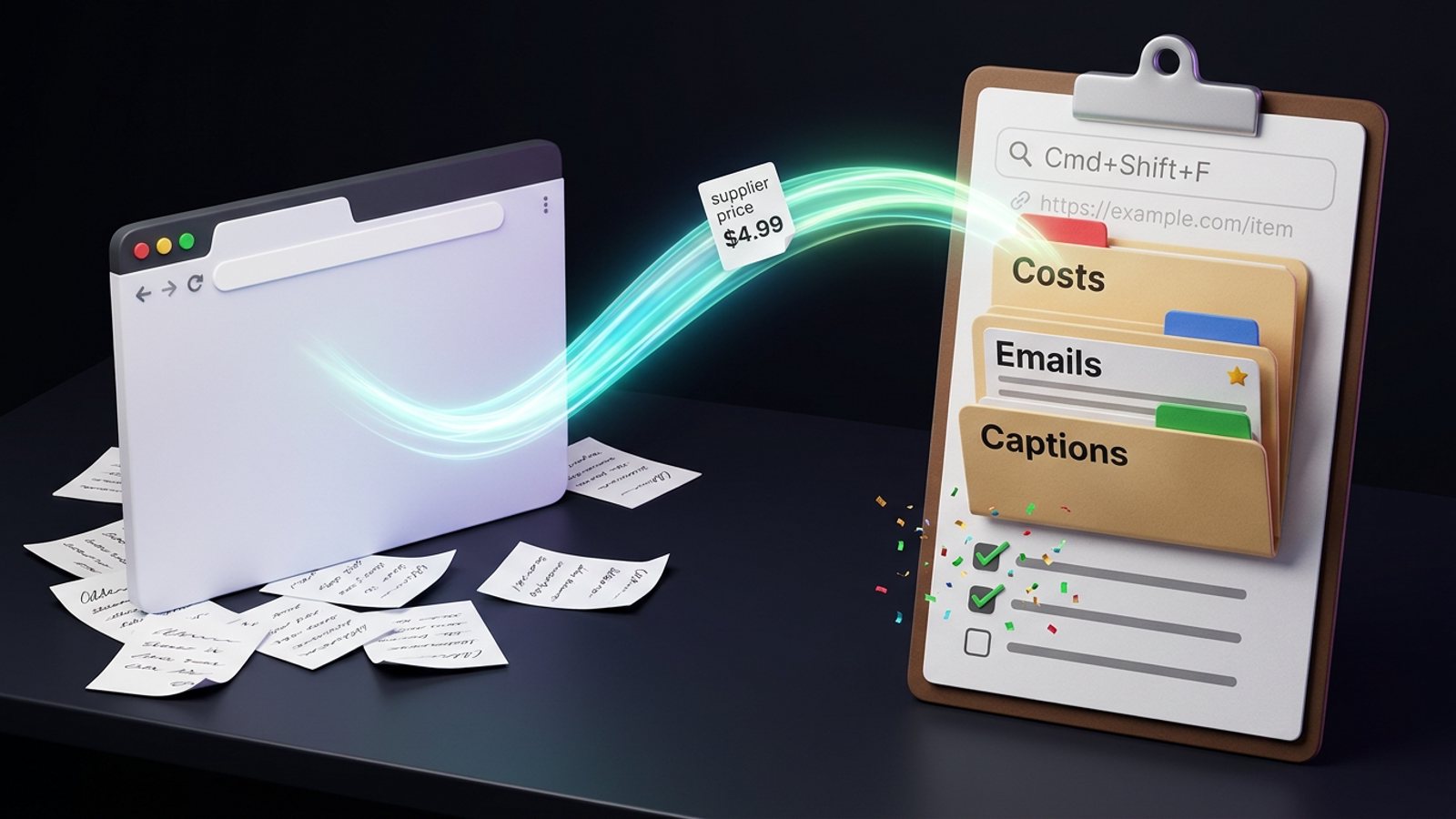
The best ClipStash alternative depends on which ClipStash you have. For Chrome work, Clipboarder Pro adds folders, notes and to-dos; for system-wide capture, Ditto and CopyQ are the free open-source
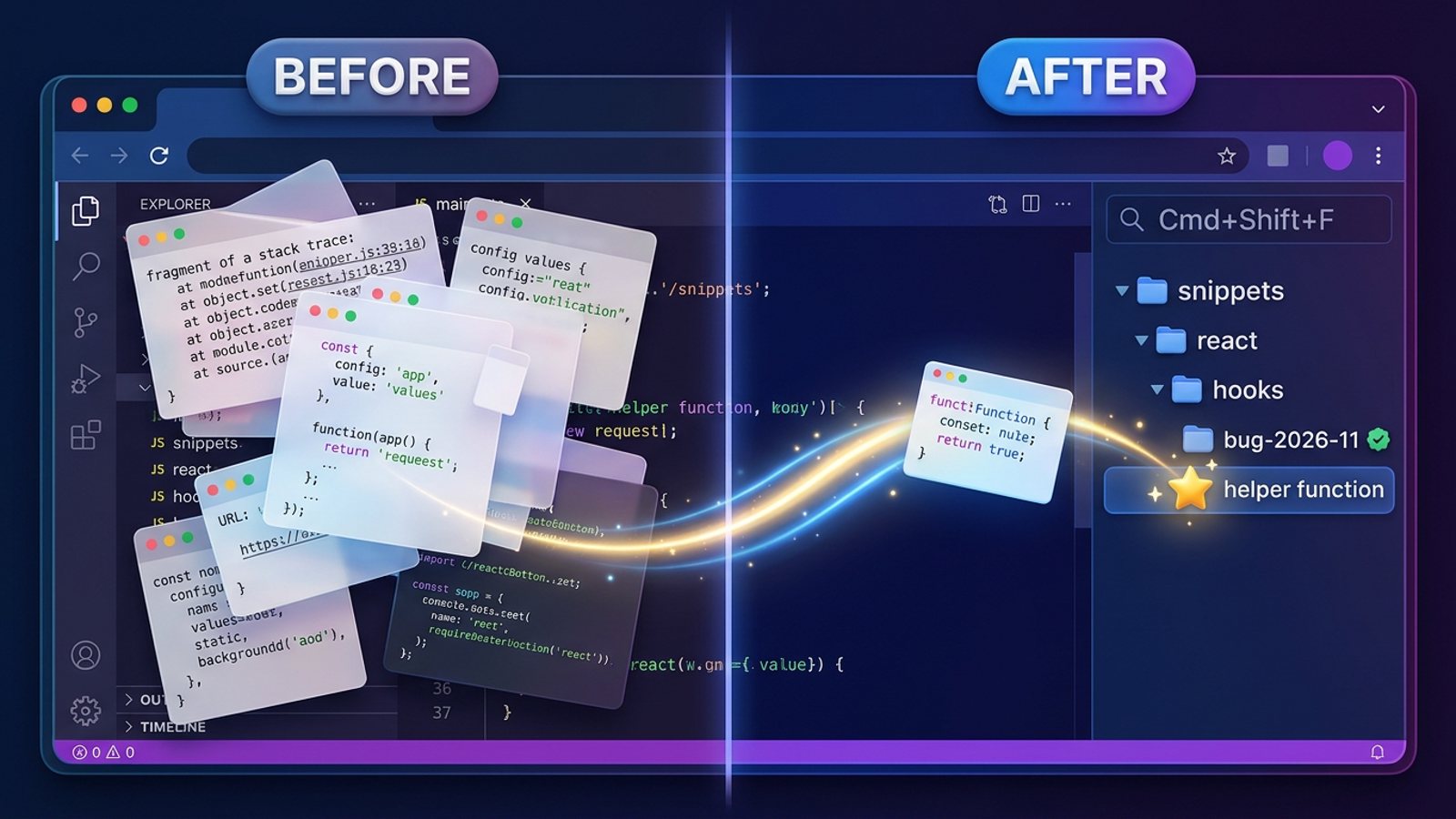
Clipboarder Pro is our pick for browser-first developers who copy code, URLs and stack traces all day. CopyQ, Ditto and Win+V cover system-wide and zero-install needs.
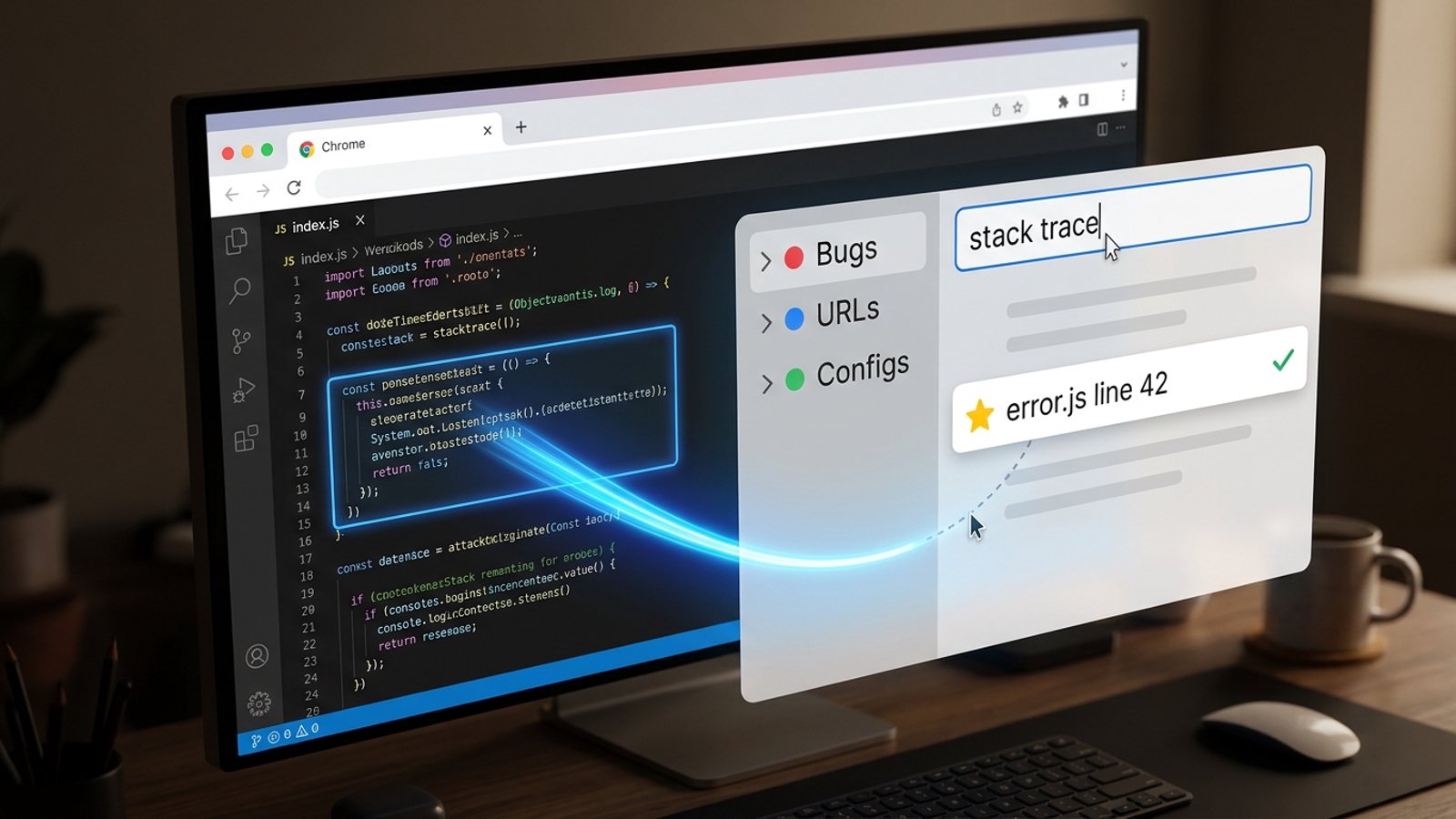
Copy History + is free to start, but free alternatives differ wildly in search, limits and data handling. Here's how to pick the right one for your workflow.
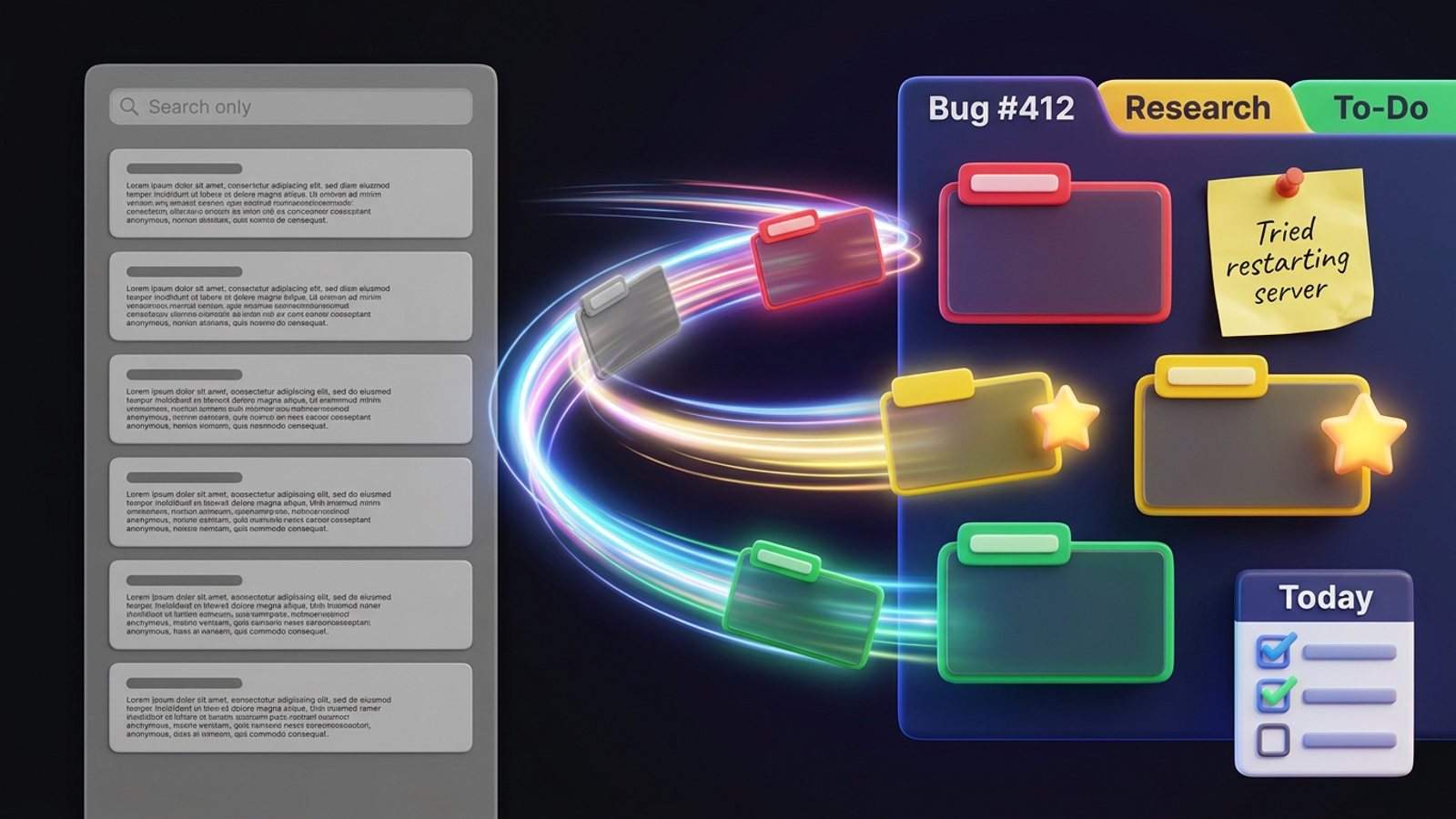
The best clipboard history free manager alternative depends on what's missing: folders, notes and to-dos (Clipboarder Pro), synced snippets, macro templates, or cross-app capture.
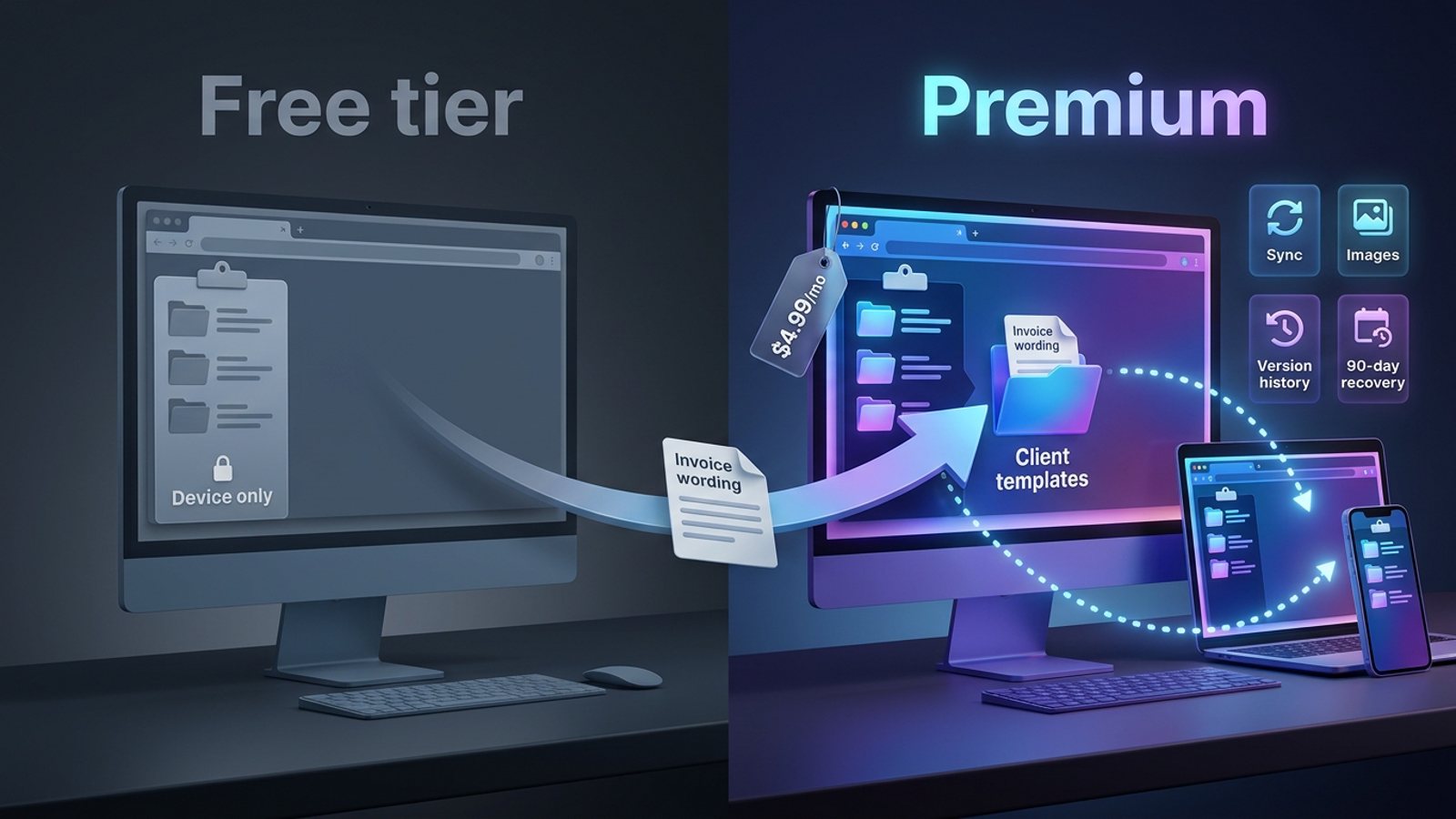
Permanent Clipboard's free tier covers snippet capture; Premium adds sync, images, version history and 90-day recovery. Here's when paying is worth it for a small business.
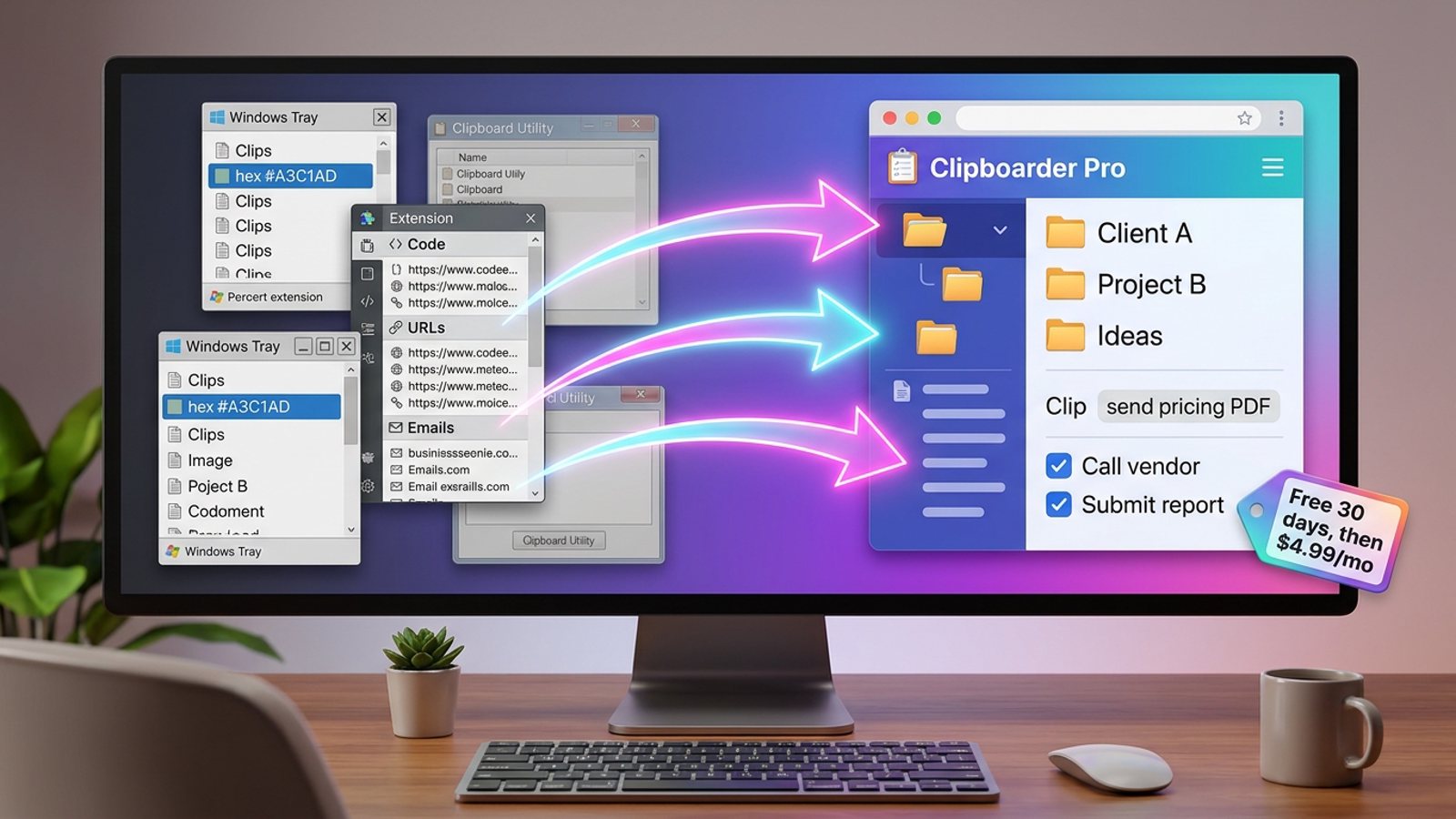
ClipManager is a name shared by several unrelated tools. Here's what each one does, where it falls short for office work, and which clipboard manager actually fits.

StackCopy keeps code you copy in a floating dashboard; InputStash recovers code you typed into web forms. Neither offers folders, notes or to-dos — here's the honest comparison and the Chrome option
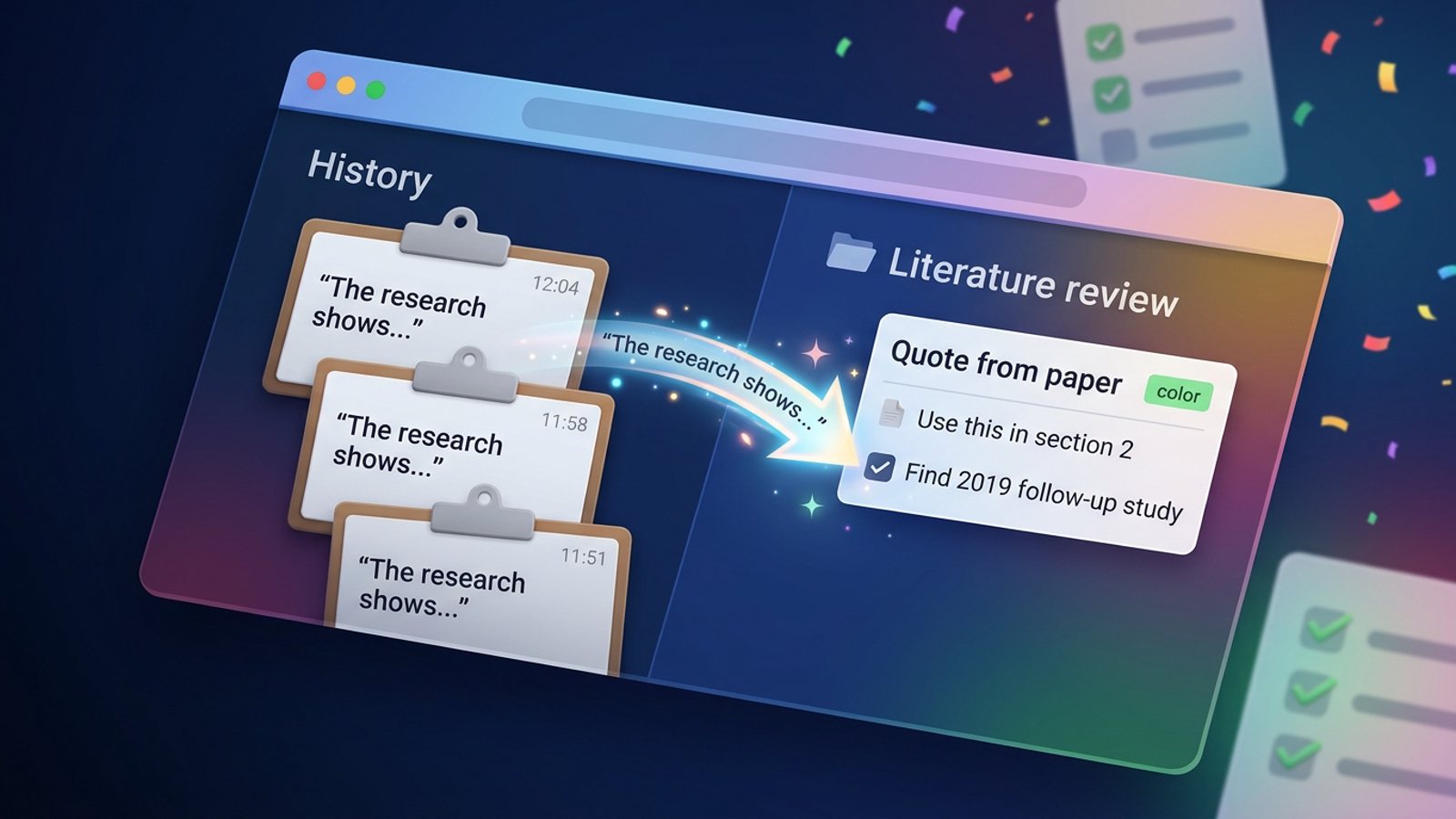
NeoClip's listings describe clip recall, not notes. Copy Everything couldn't be verified. For clips plus in-line notes and to-dos in Chrome, Clipboarder Pro is the honest pick.
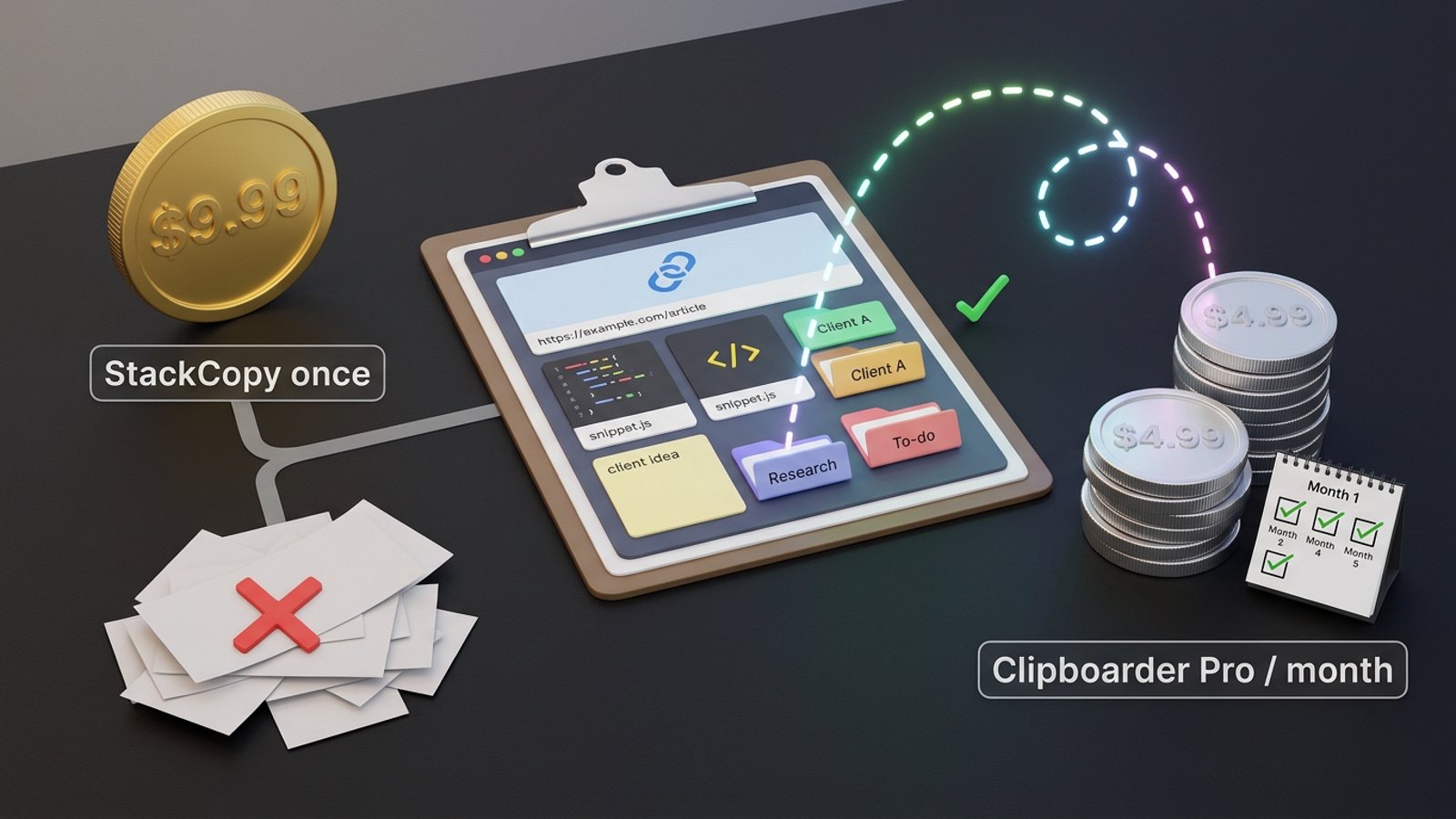
StackCopy costs $9.99 once after a 3-day trial, but free OS tools and open-source apps cost nothing. See when Clipboarder Pro's $4.99/month is worth it.
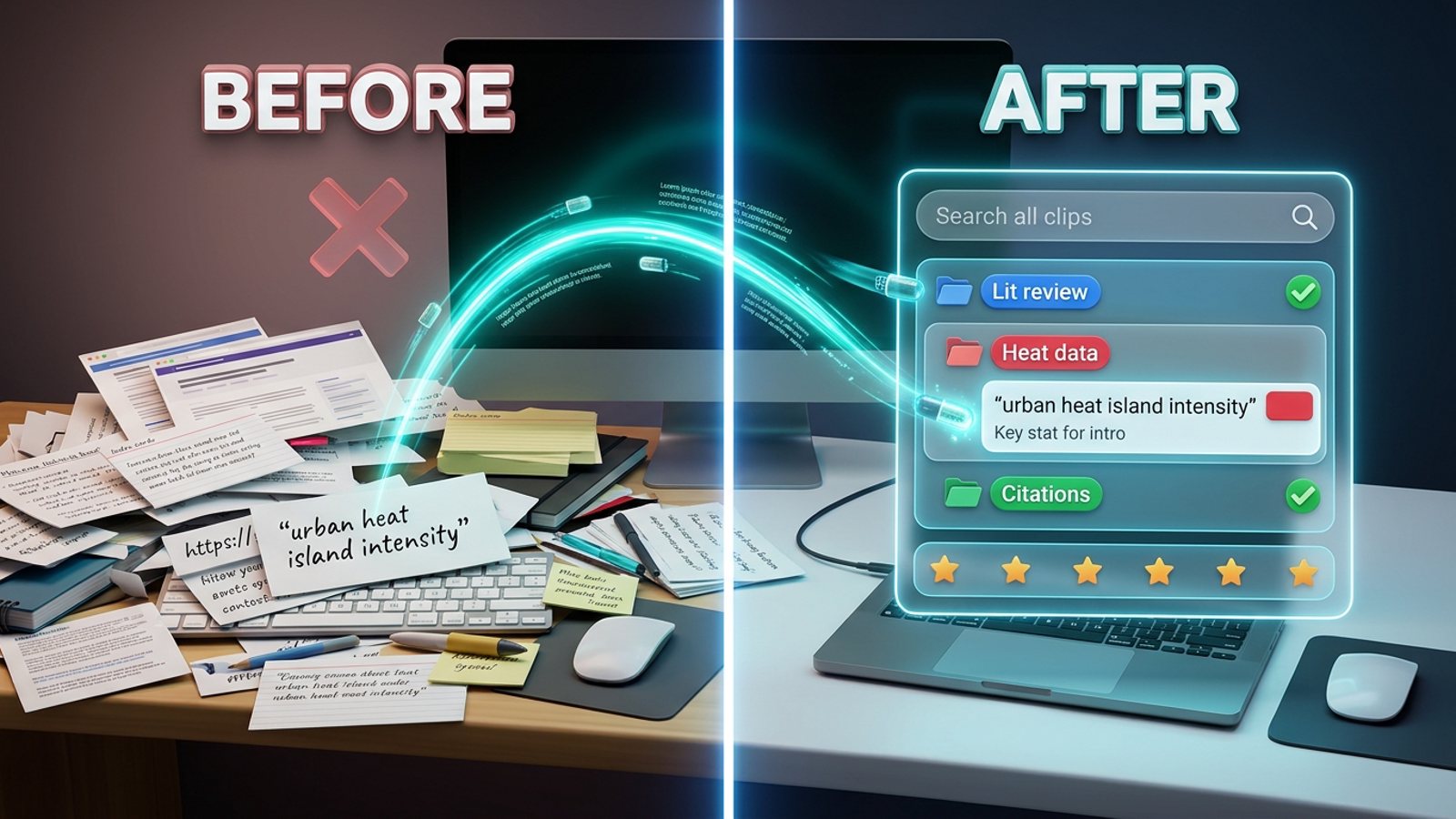
InputStash rescues typed drafts, not research. See the clipboard managers with folders, stars, notes and search that actually organise your sources.
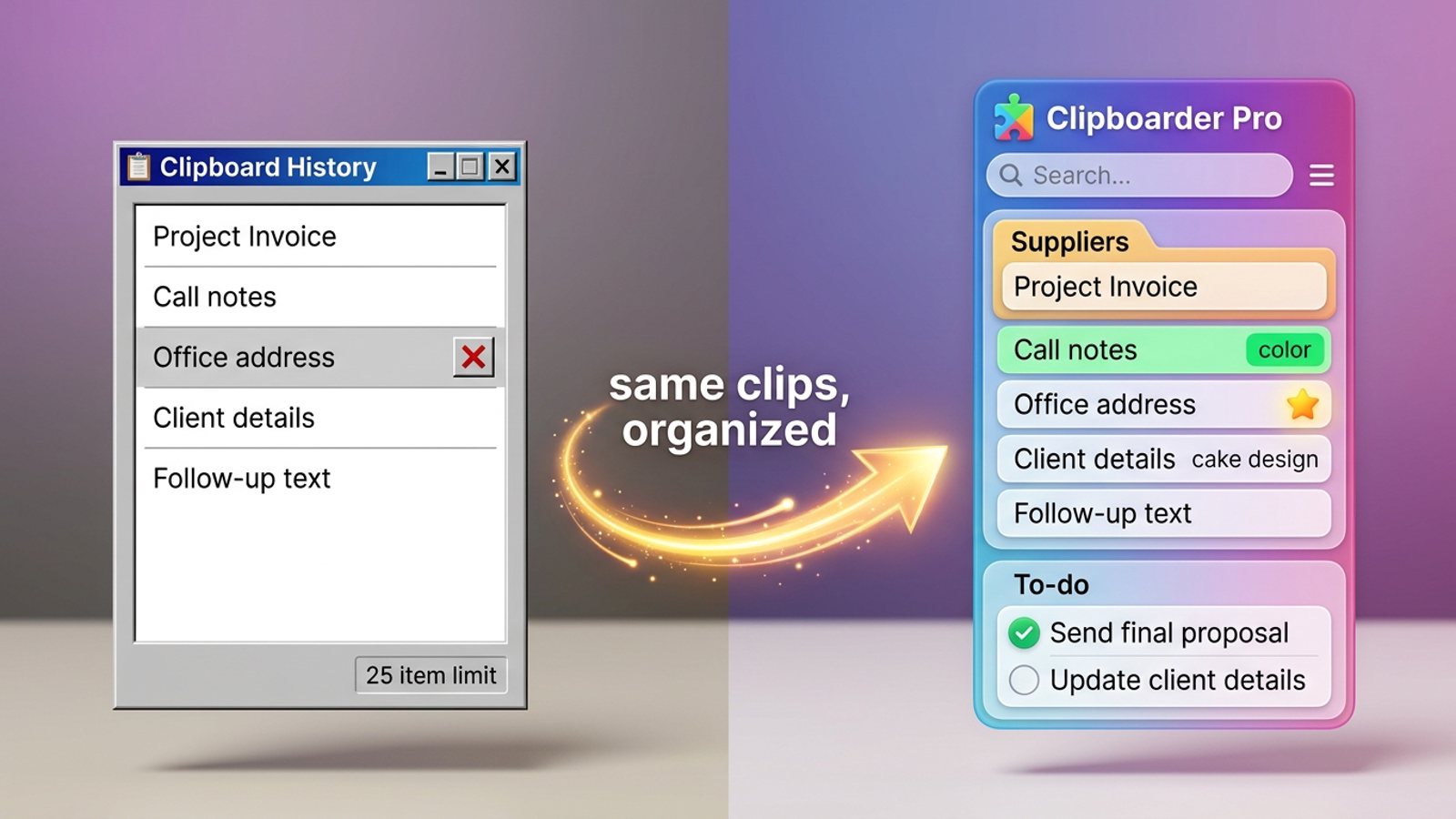
Yes — Windows Win+V, macOS Spotlight, CopyQ and Ditto are all free. If you work in Chrome, Clipboarder Pro adds folders, notes and to-dos on a local, no-server history.
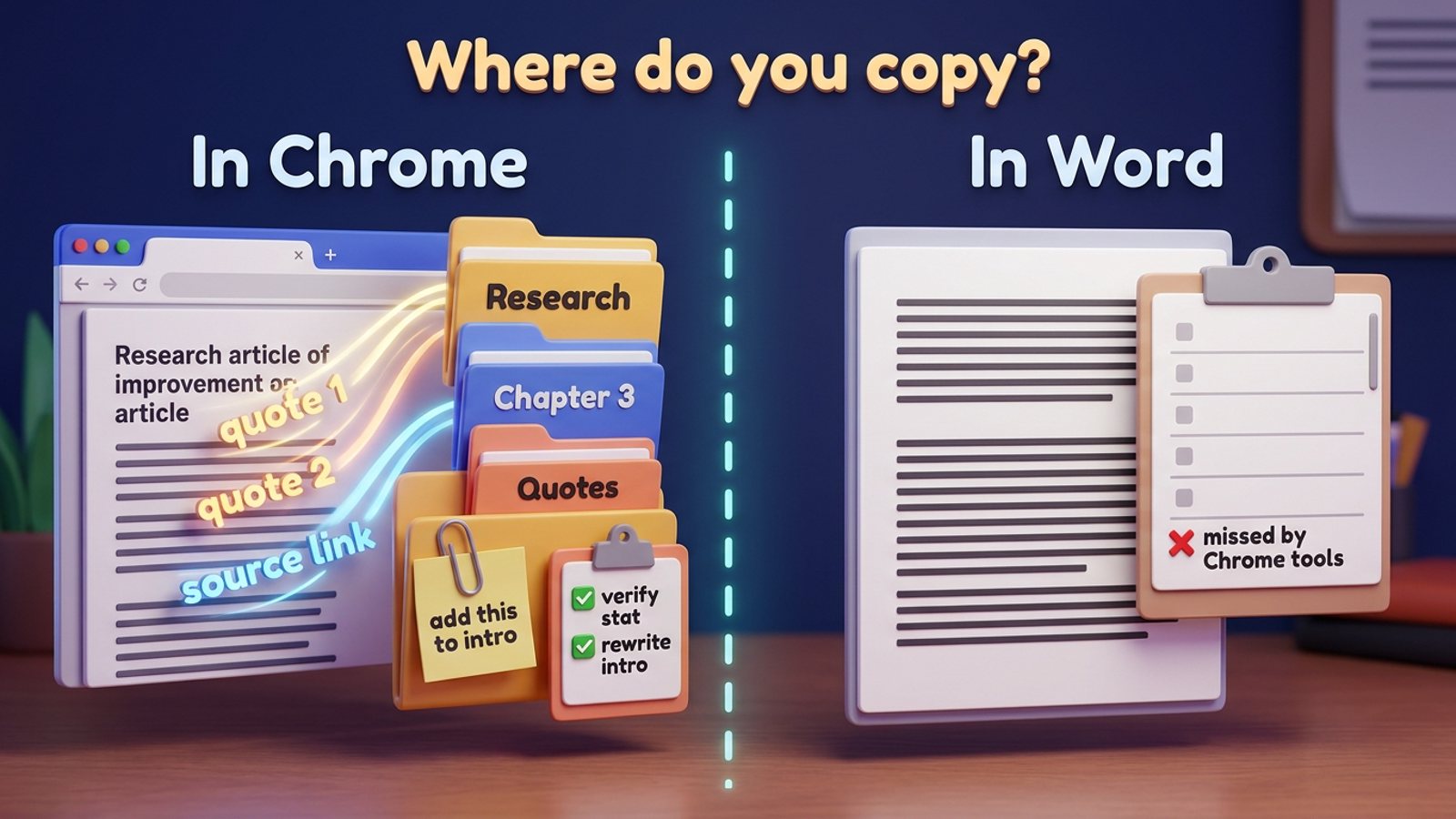
Compare Clipboarder Pro, Ditto, CopyQ and Win+V for writers who outgrew NeoClip. Match the tool to where you copy — browser or desktop — and keep your clips organised.
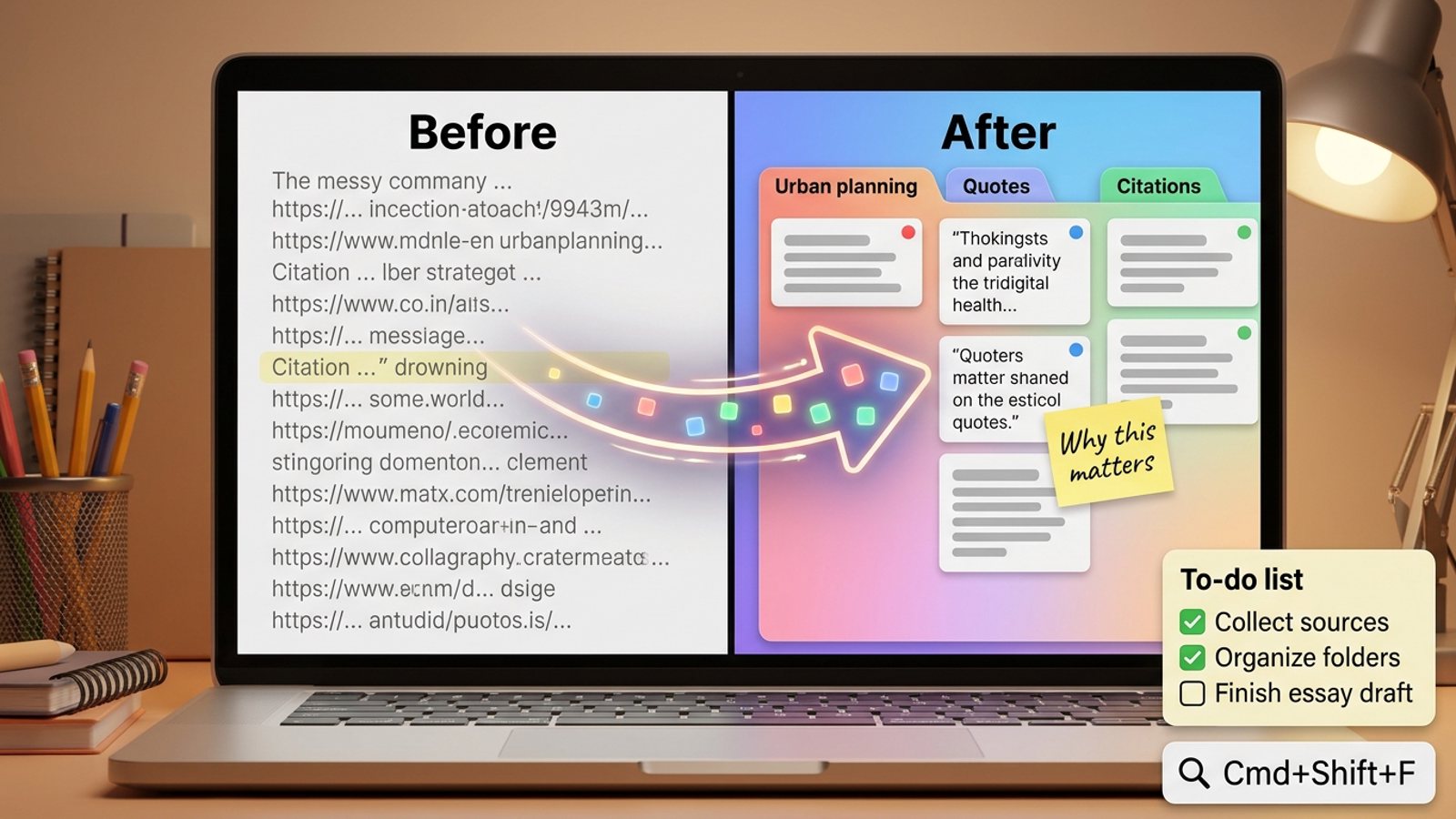
The five clipboard tools worth knowing for a laptop study day, judged on search, folders and where your data lives — plus which one fits your workflow.
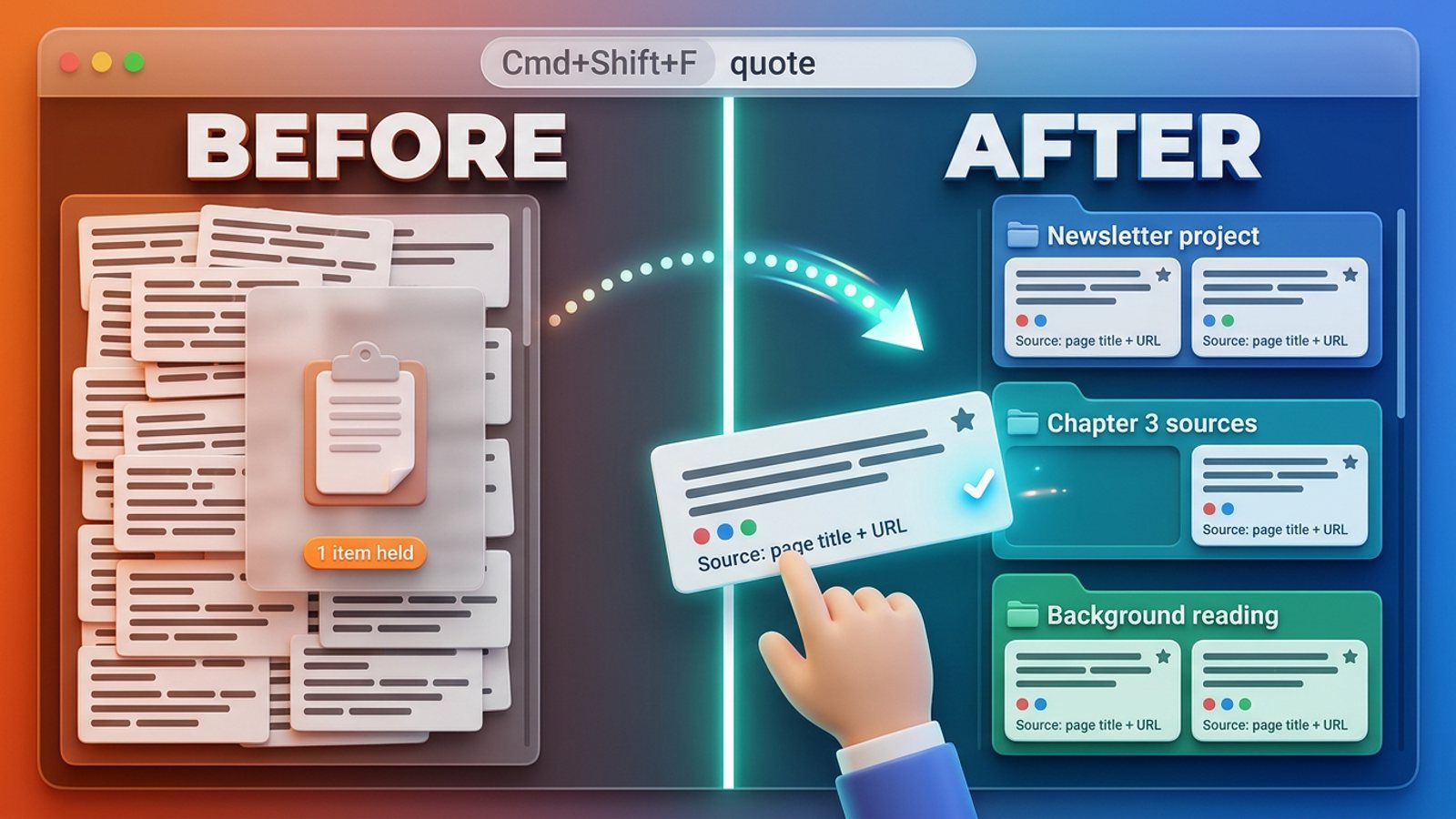
Capture every quote, link and snippet automatically, then file the keepers into project folders with stars and notes — so no source disappears when you close the tab.
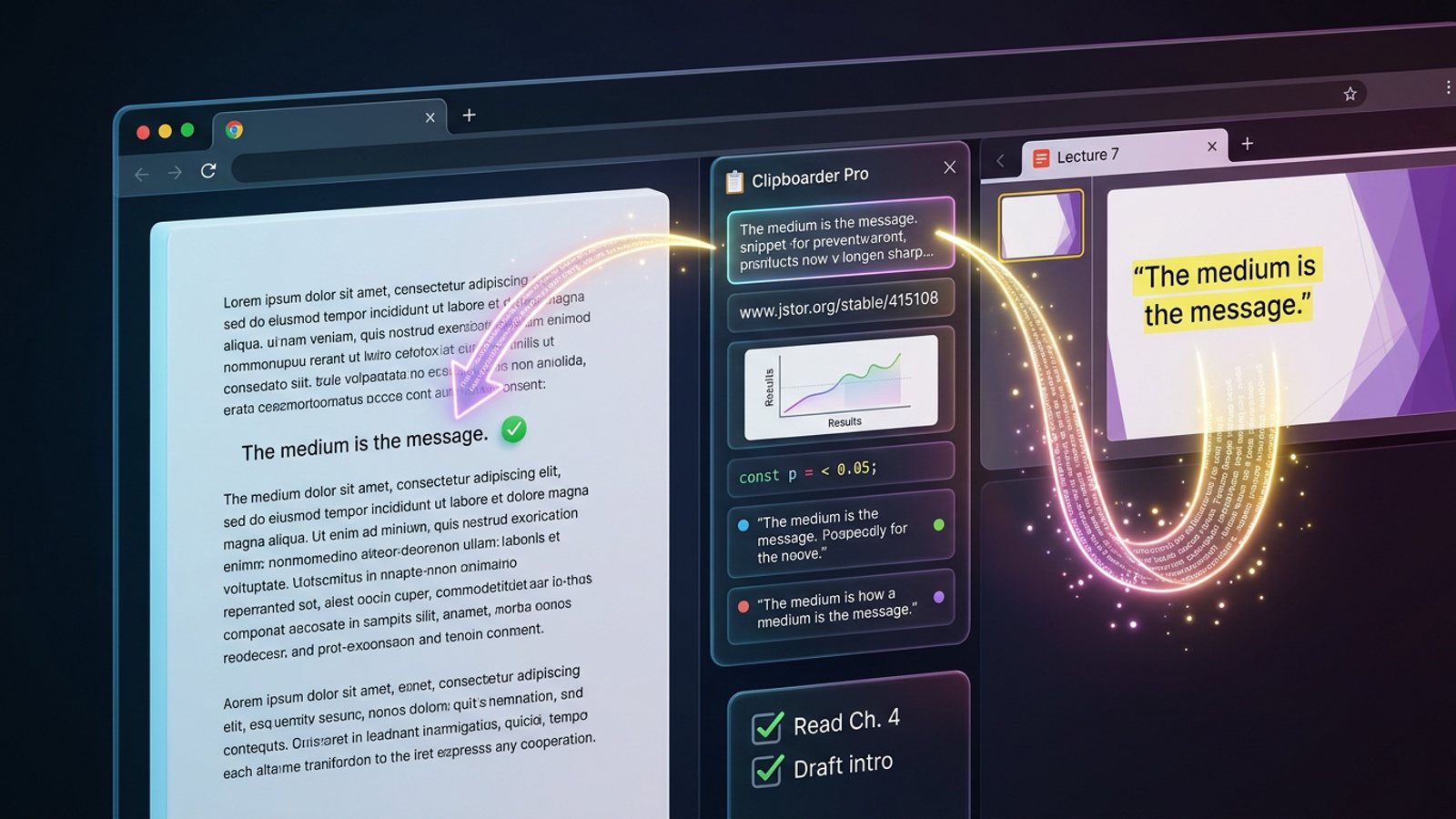
For study sessions that live in Chrome, a browser-based clipboard history beats OS-level lists. Here's how Clipboarder Pro compares to Win+V, macOS and desktop managers.
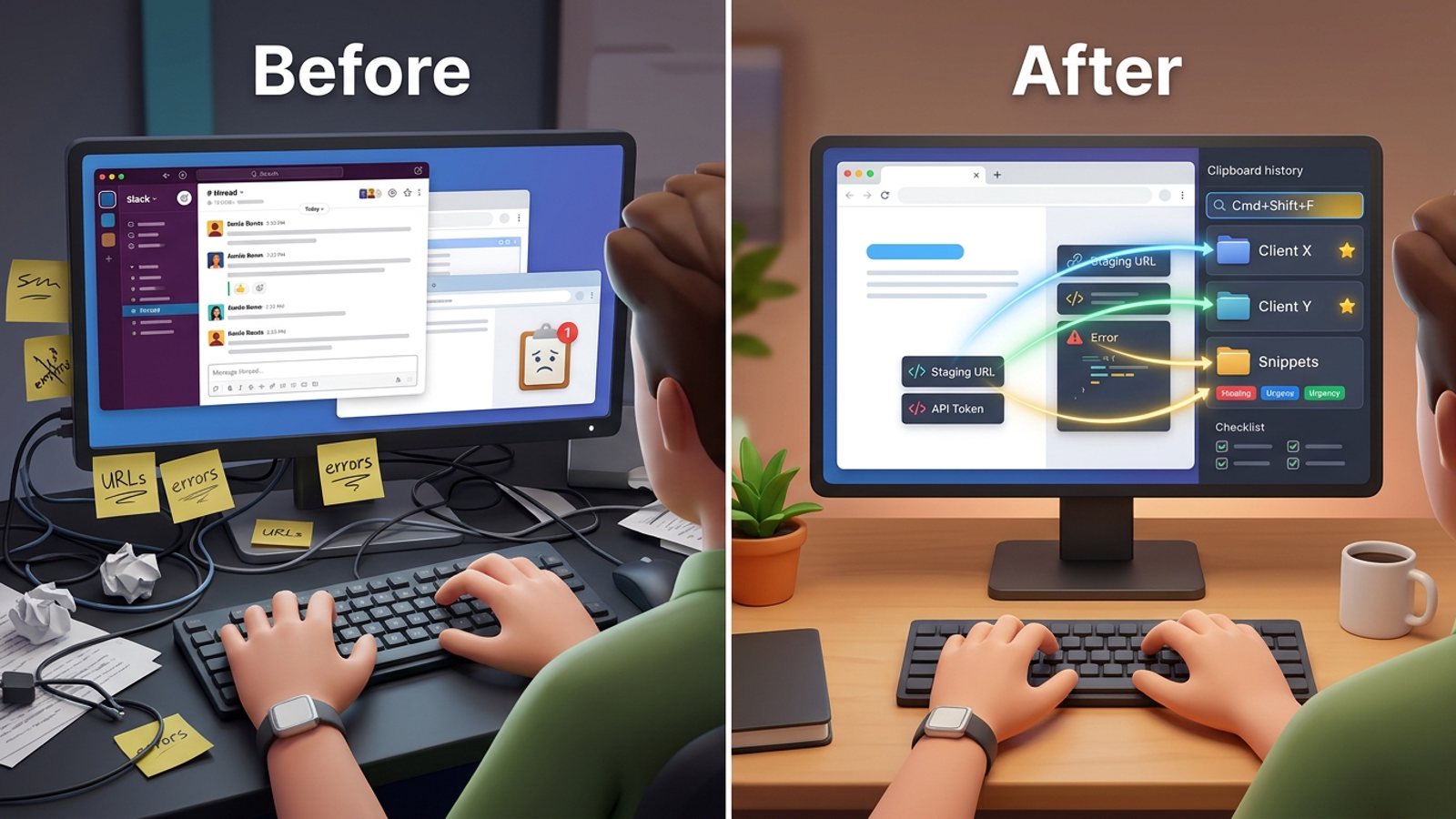
For Chrome-heavy web work, Clipboarder Pro saves URLs, snippets, error text and tokens with folders, notes and fast search. For system-wide capture, Ditto or Maccy are the honest picks.
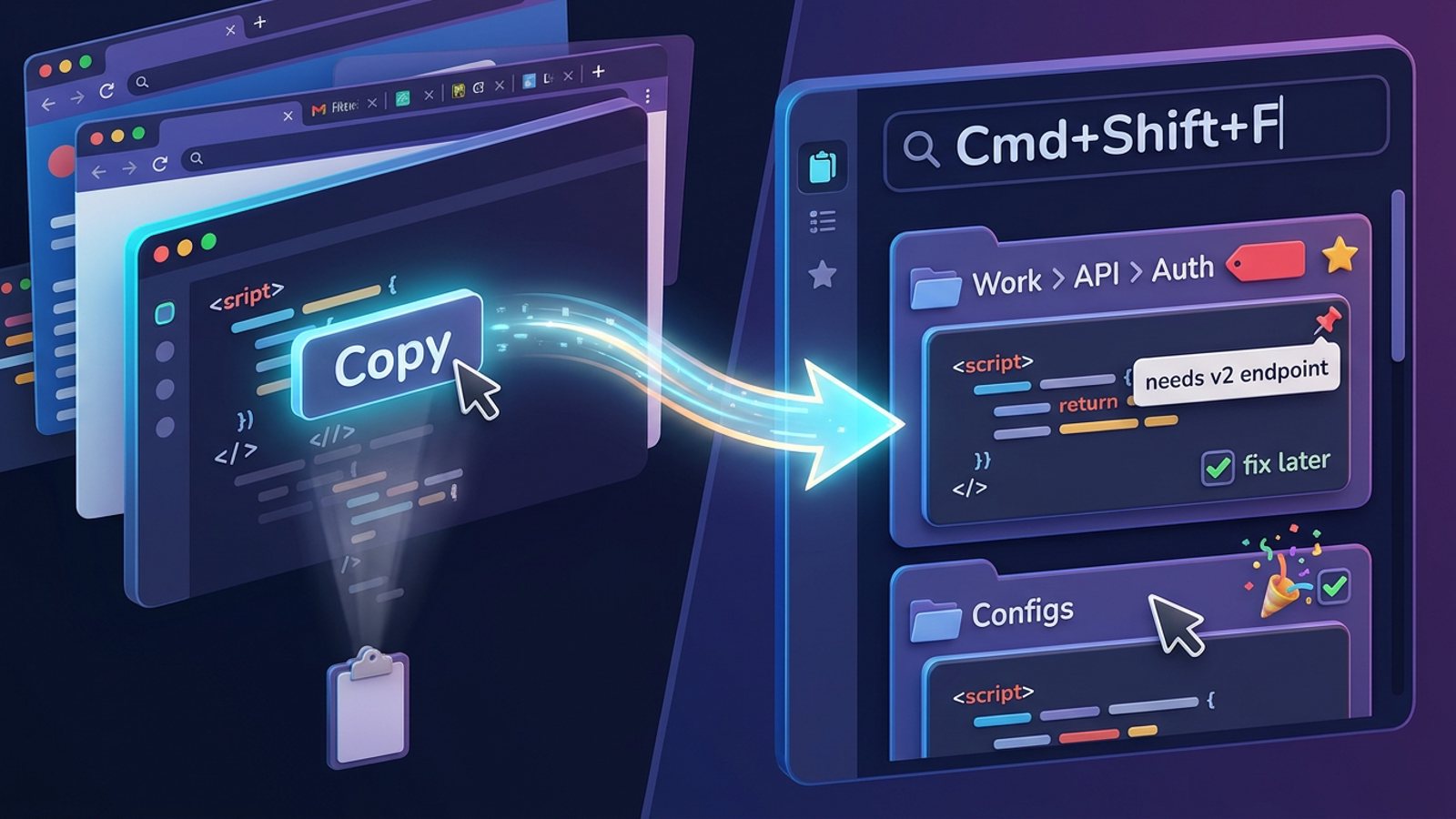
The five best clipboard managers for saving code snippets in 2026, compared by platform, price and how well they organize your copied code.
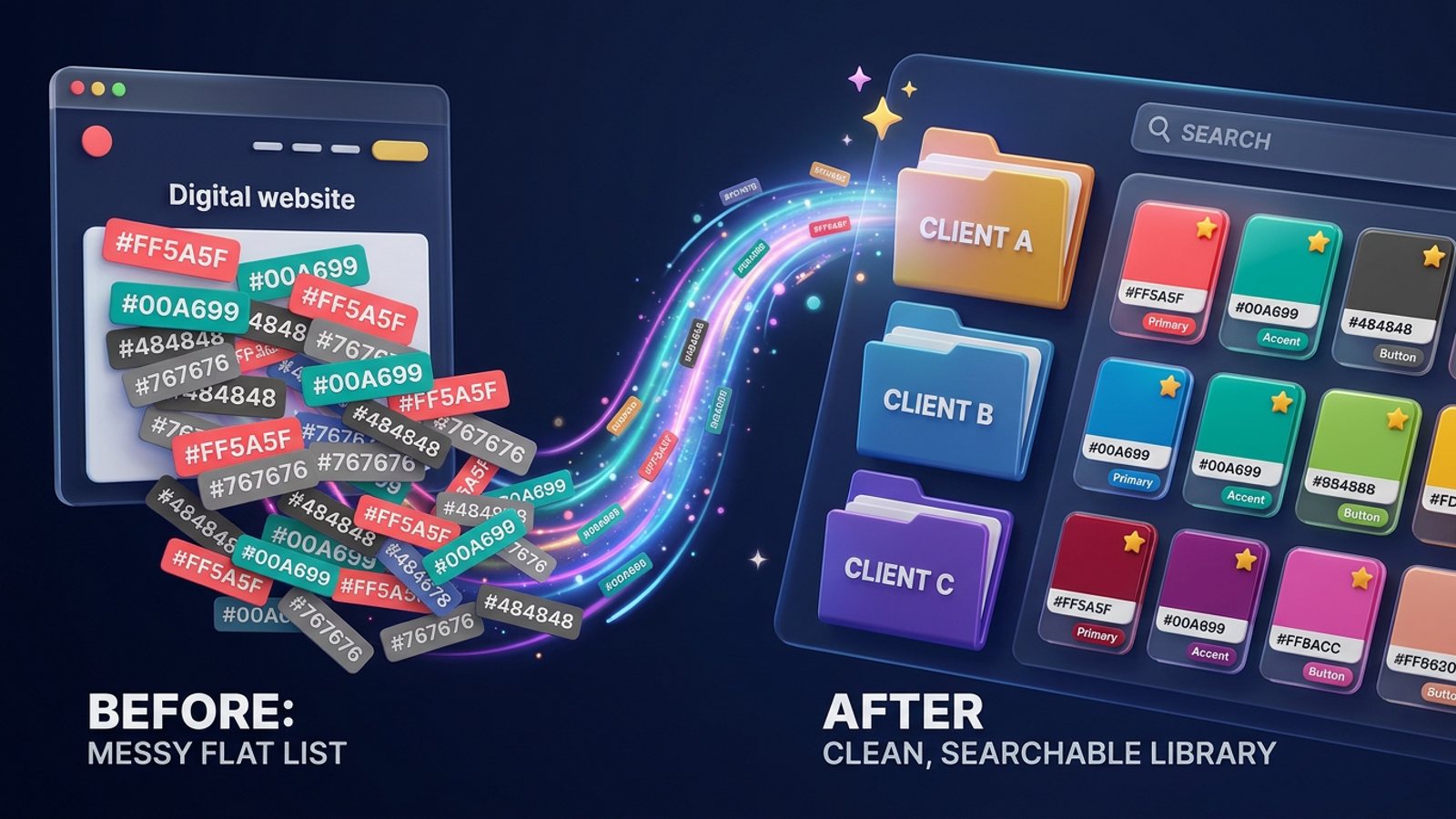
Stop losing brand colors. Capture every hex code the moment you copy it, then file it by client with stars, color tags and notes — here's the exact workflow.
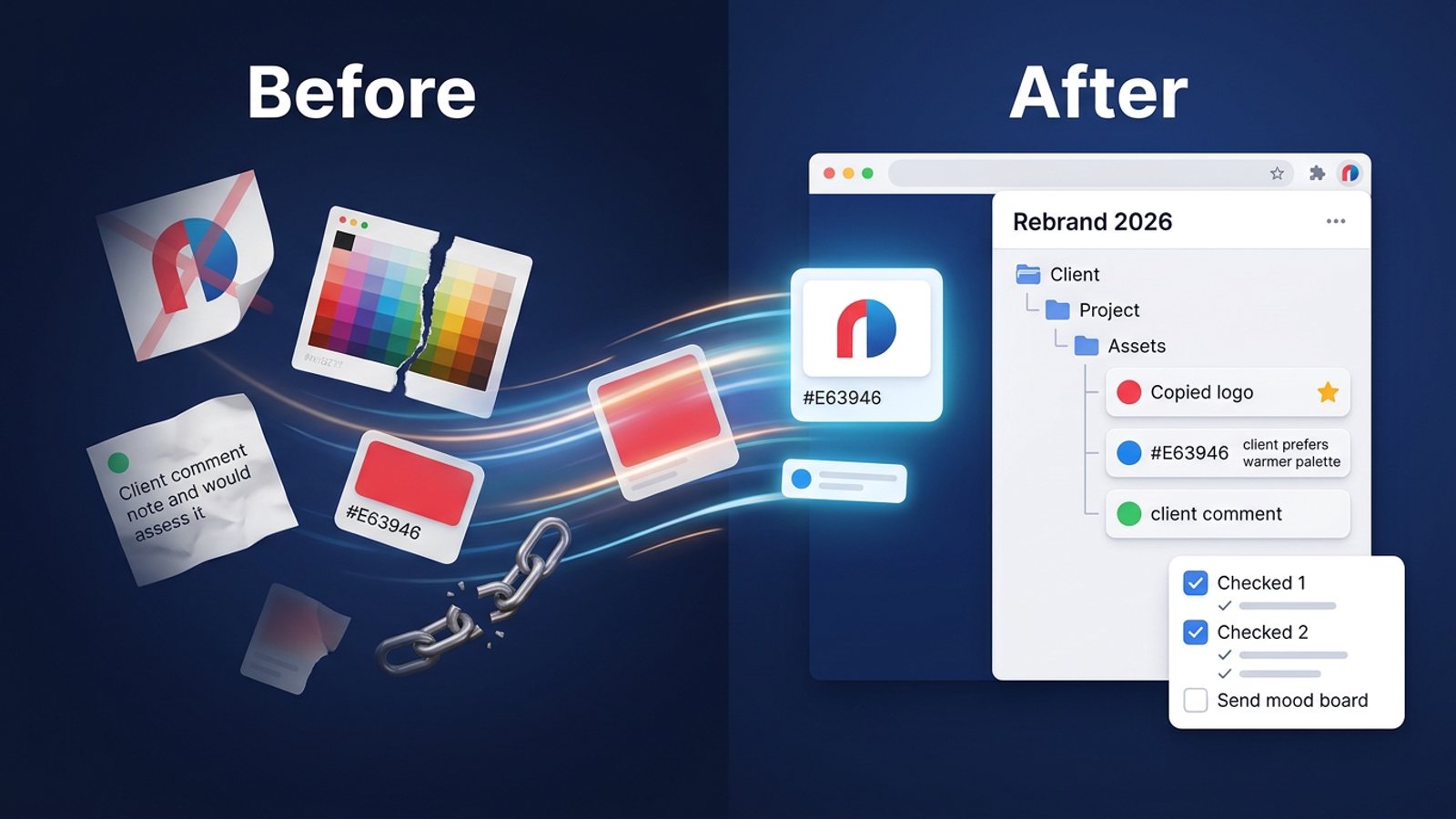
Five clipboard managers for designers compared: the Chrome-native pick that files copied images, URLs and hex codes into folders, plus the best Mac and Windows alternatives.
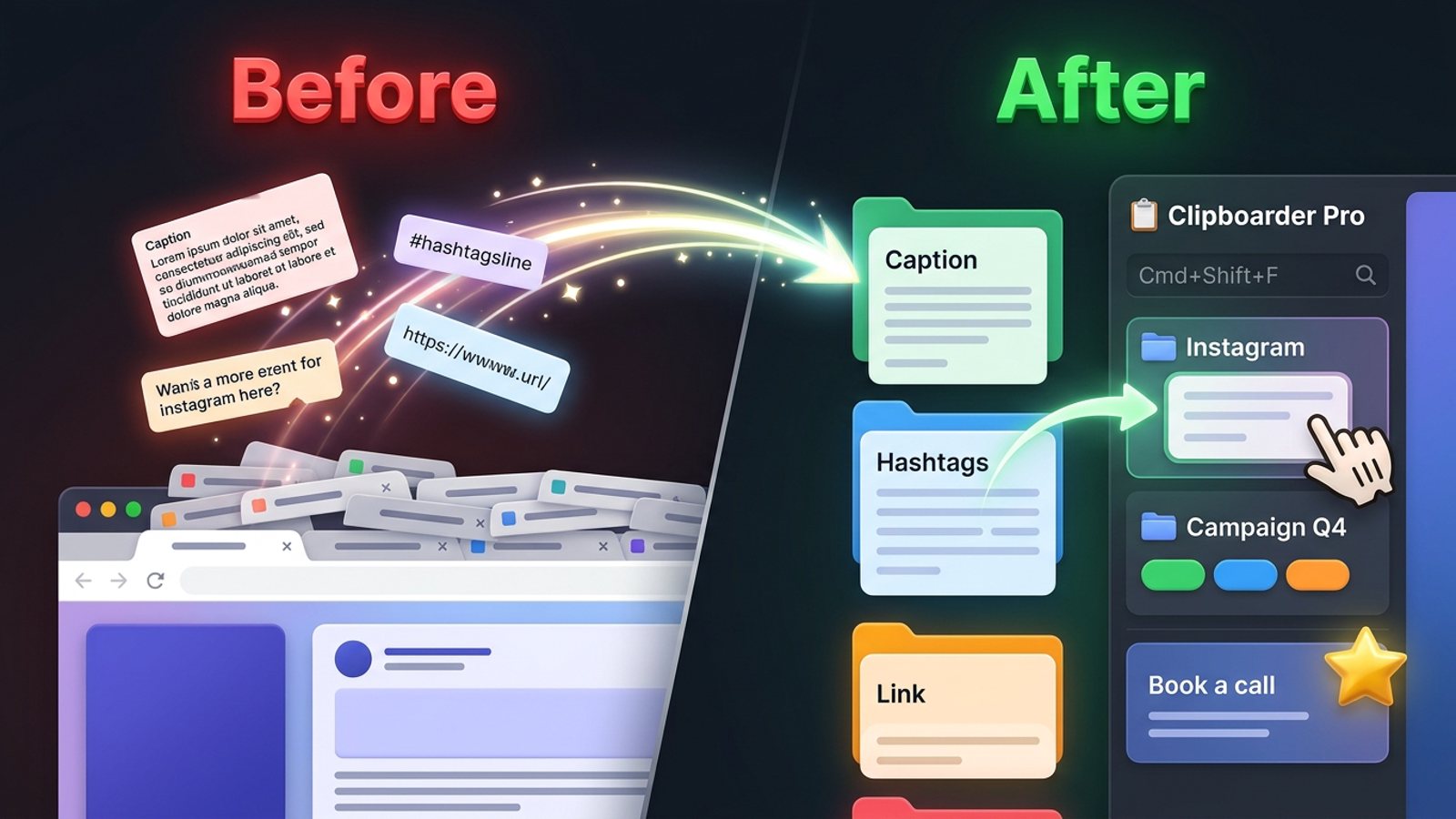
The best clipboard history tool for content creators depends on where you work. Chrome users get auto-save, folders, tags and search with Clipboarder Pro; Mac users have Raycast and Paste.

A clipboard history tool catches every URL the moment you copy it, then lets you file and search it later. Here's how to stop losing research links for good.

Clipboarder Pro is our pick for browser-first writers: it auto-saves what you copy, sorts clips into folders, and keeps notes and to-dos beside them.
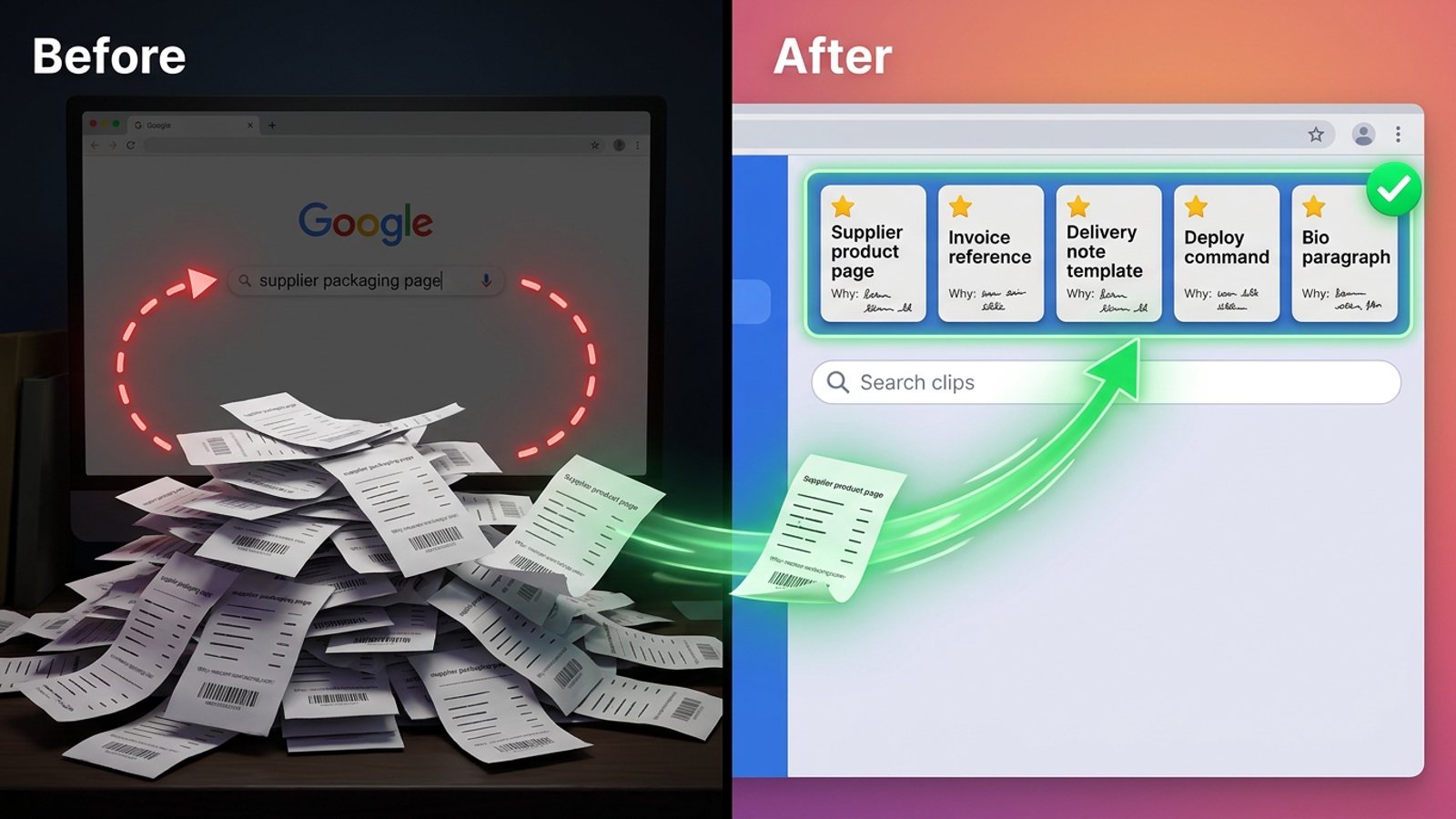
Stop re-finding copied links by giving every useful copy a permanent home: a searchable clipboard history plus a starred shelf for the links and snippets you reuse weekly.
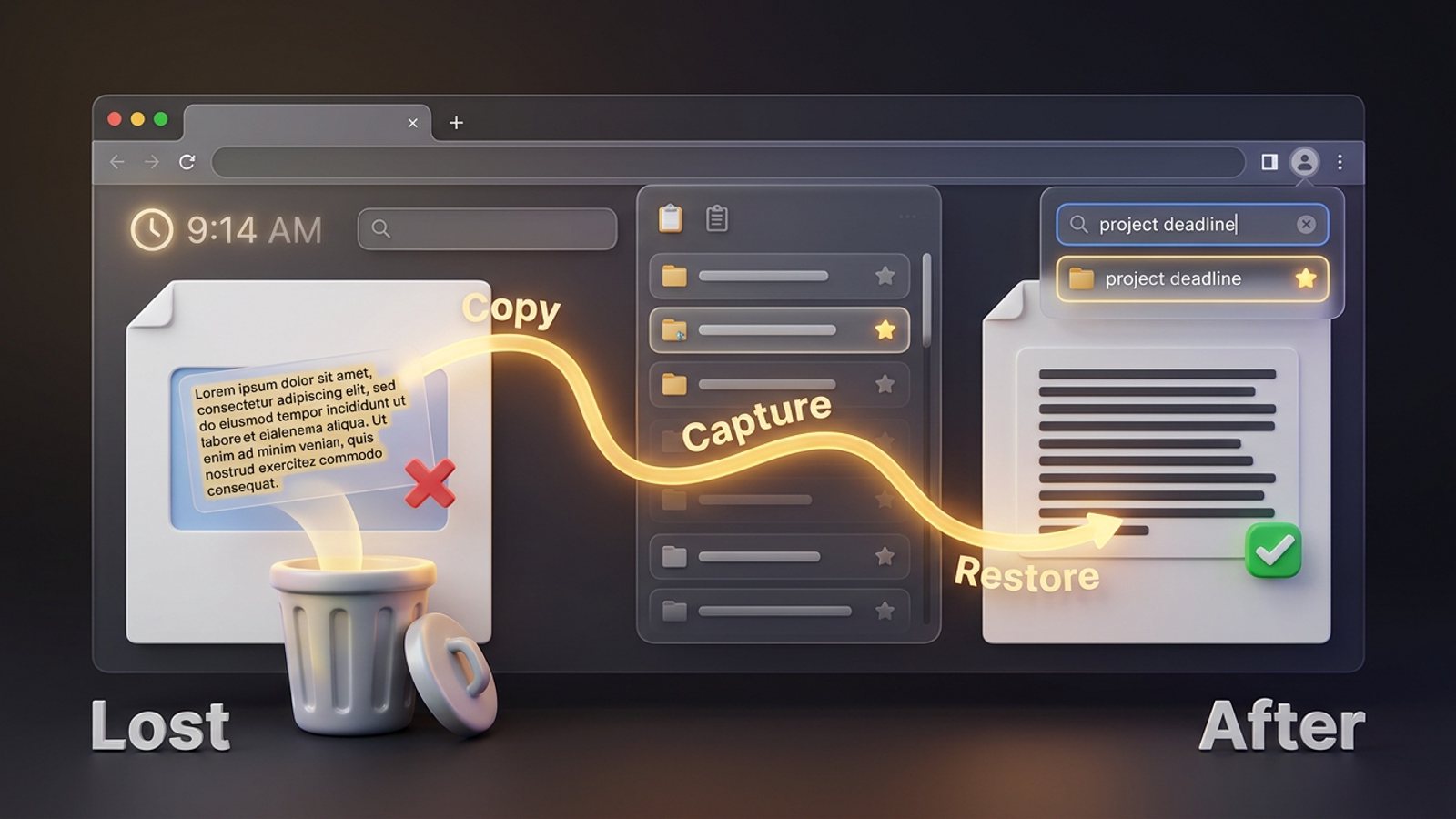
Chrome keeps no clipboard history of its own, so a new copy overwrites the last one. Here's how to find that lost paragraph or URL — and how to make sure it never happens again.
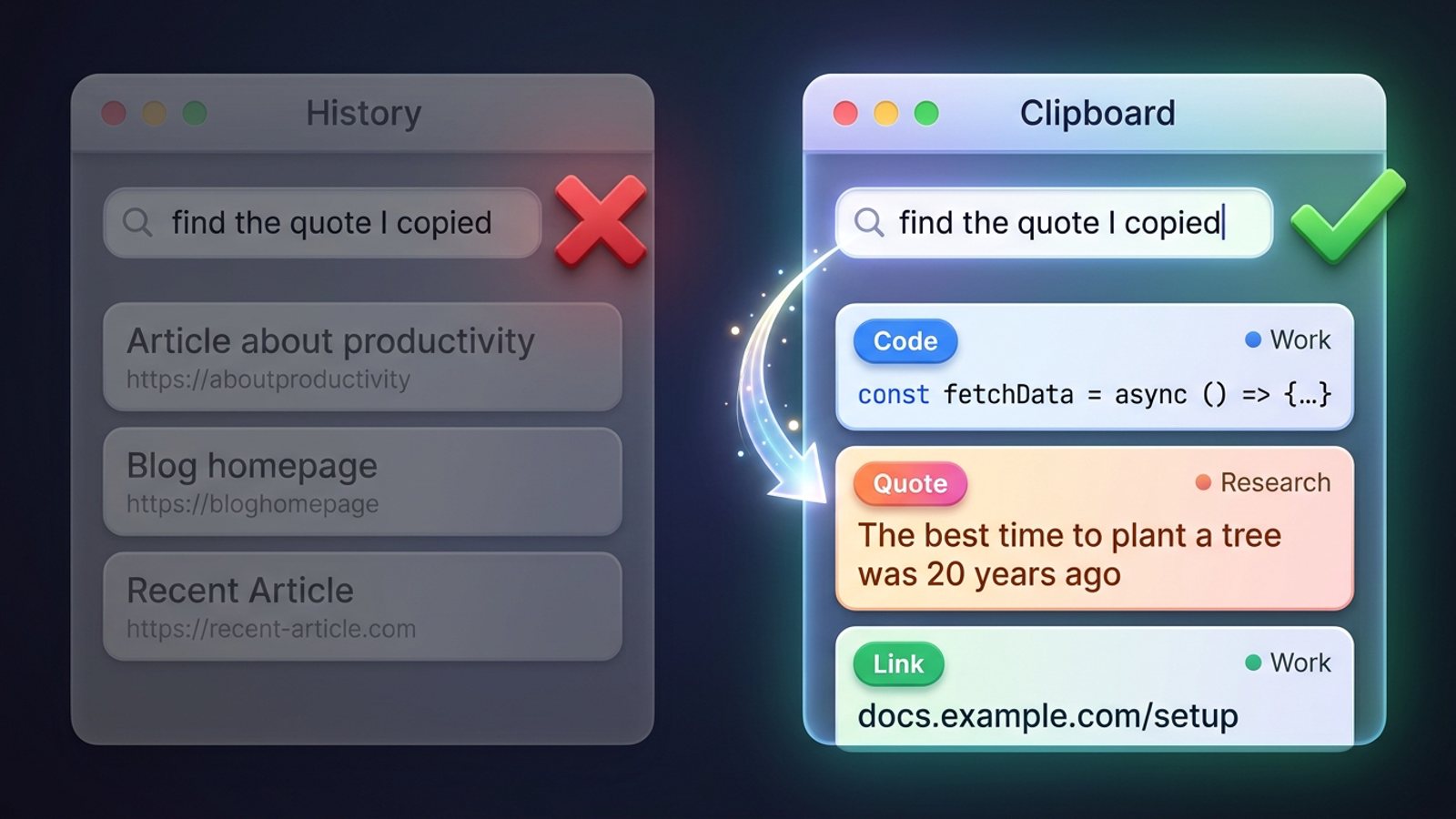
Browser history finds pages, not the text, code or images you copied. Here's when a Chrome clipboard extension earns its place — and when to skip it.
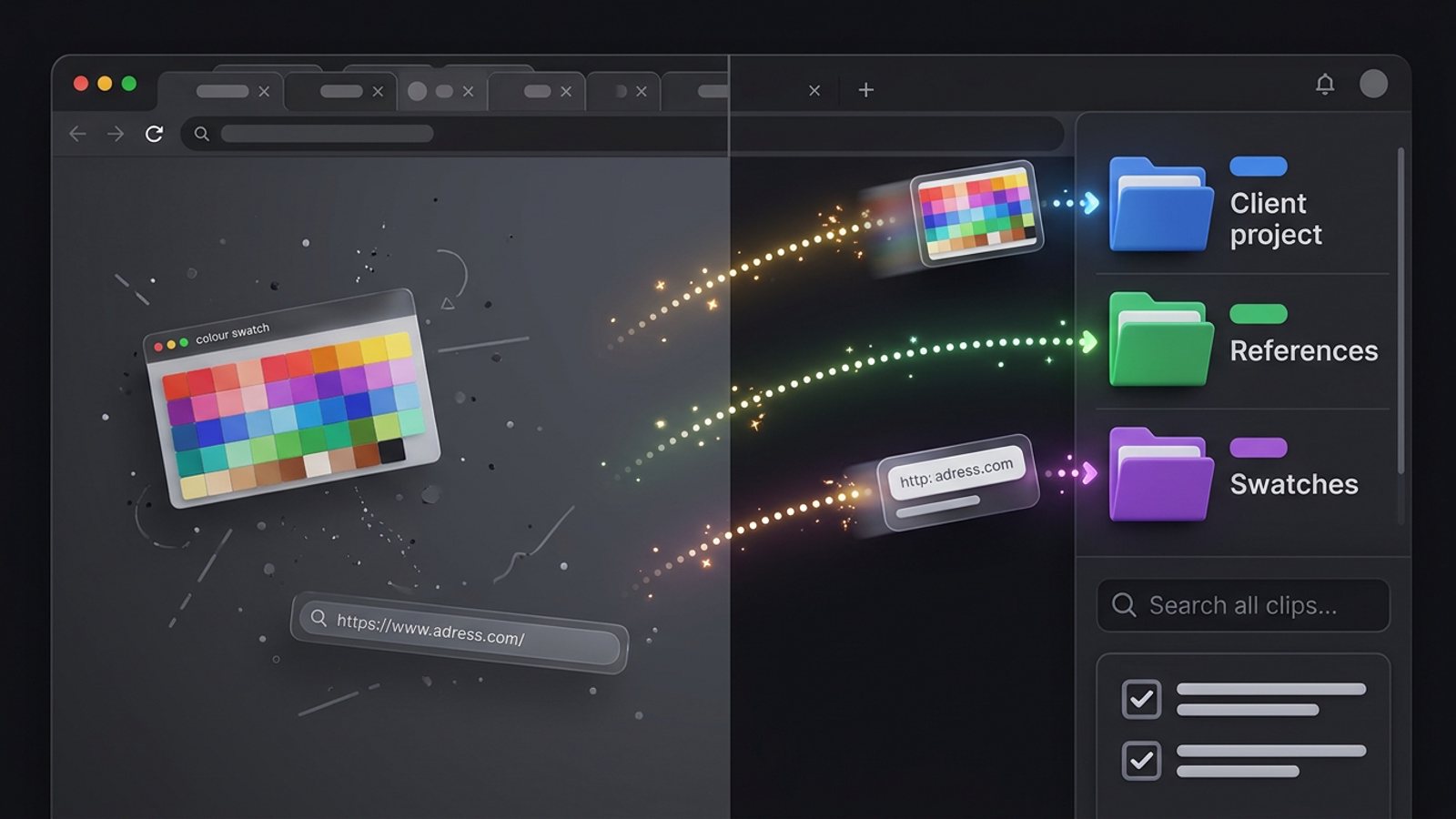
Chrome keeps only the last thing you copy. Learn how to save every copied image and URL automatically, then organize them into folders you can search.
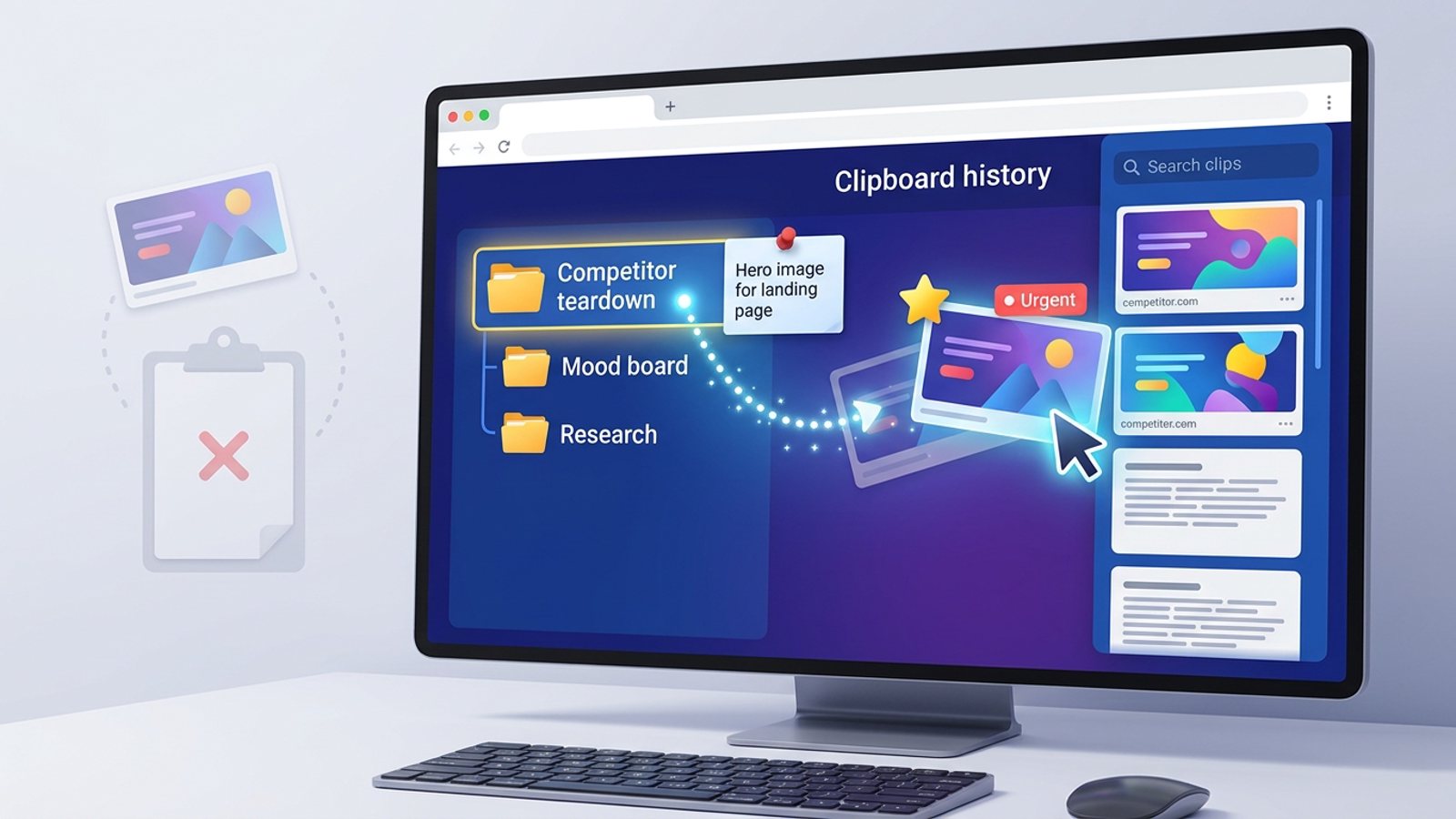
Yes — several Chrome extensions save copied images alongside text and links in a local, searchable history. Here's how to pick one and stop losing screenshots.
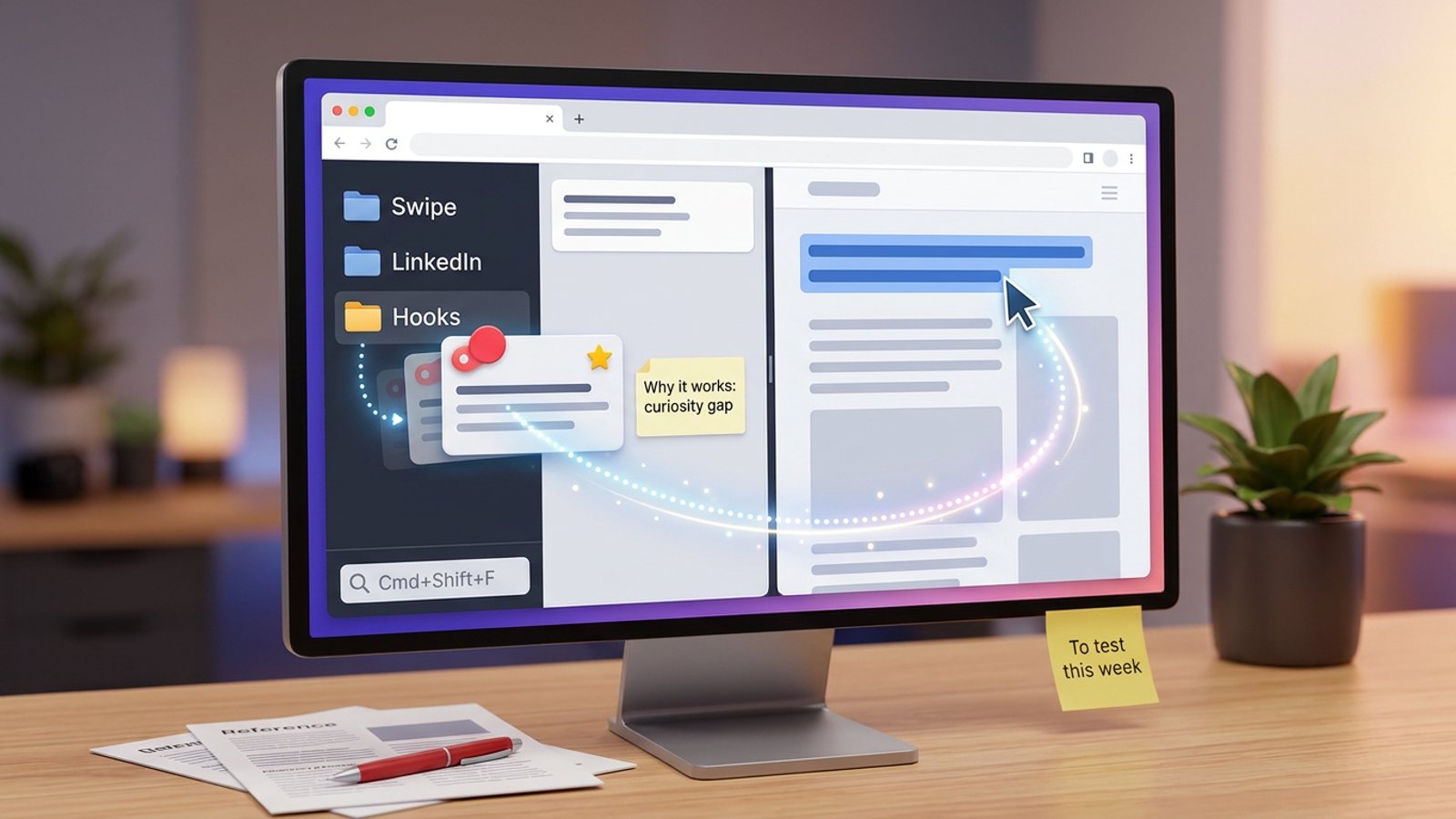
The best clipboard tool for swipe files catches every copy automatically, files it into folders, and tags or stars the keepers. Here's how to build a swipe file you'll actually reopen.
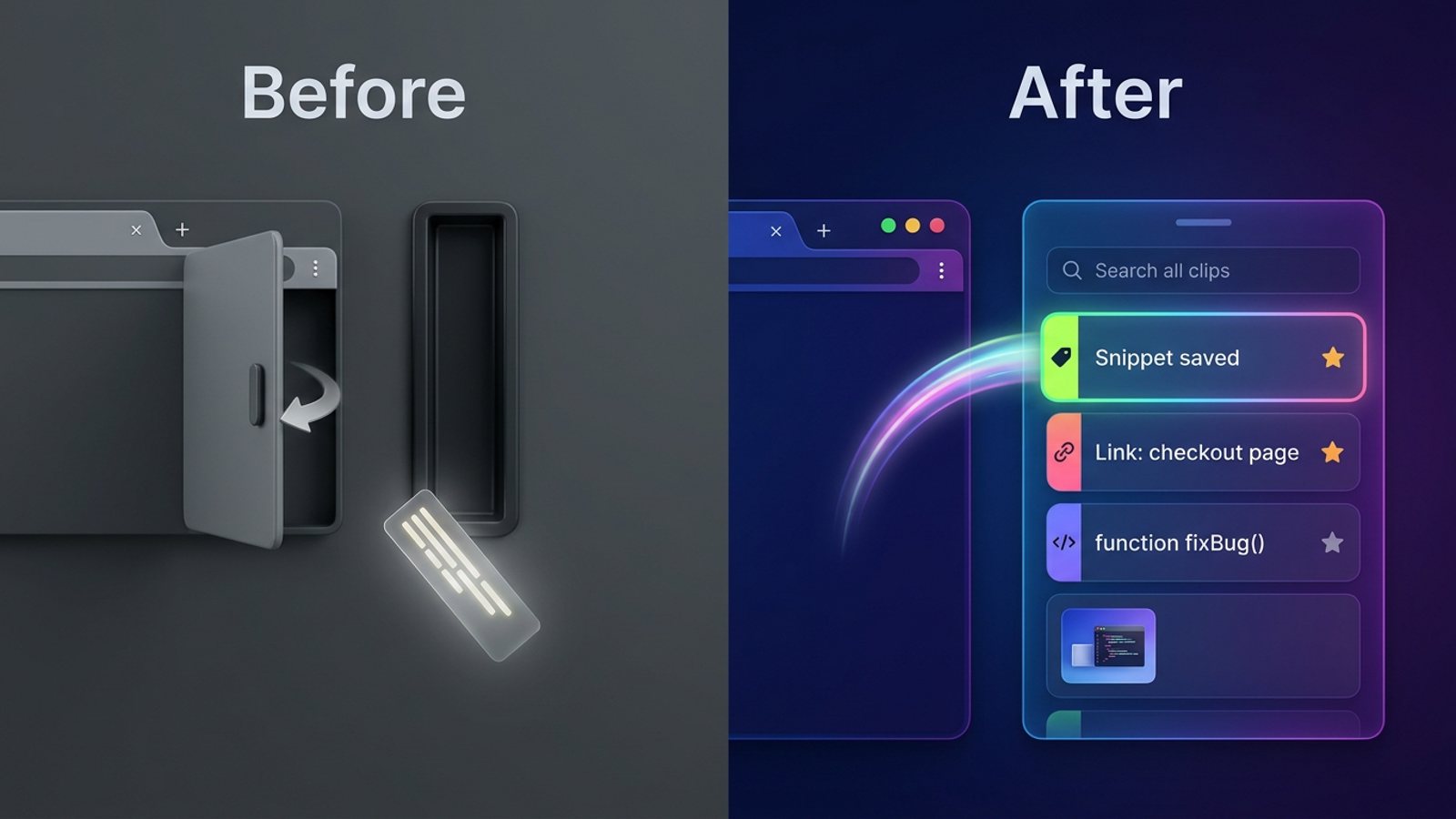
Stop losing copied text by moving it out of the single-item clipboard into a clipboard history that saves every copy. Here's how to set one up in minutes.
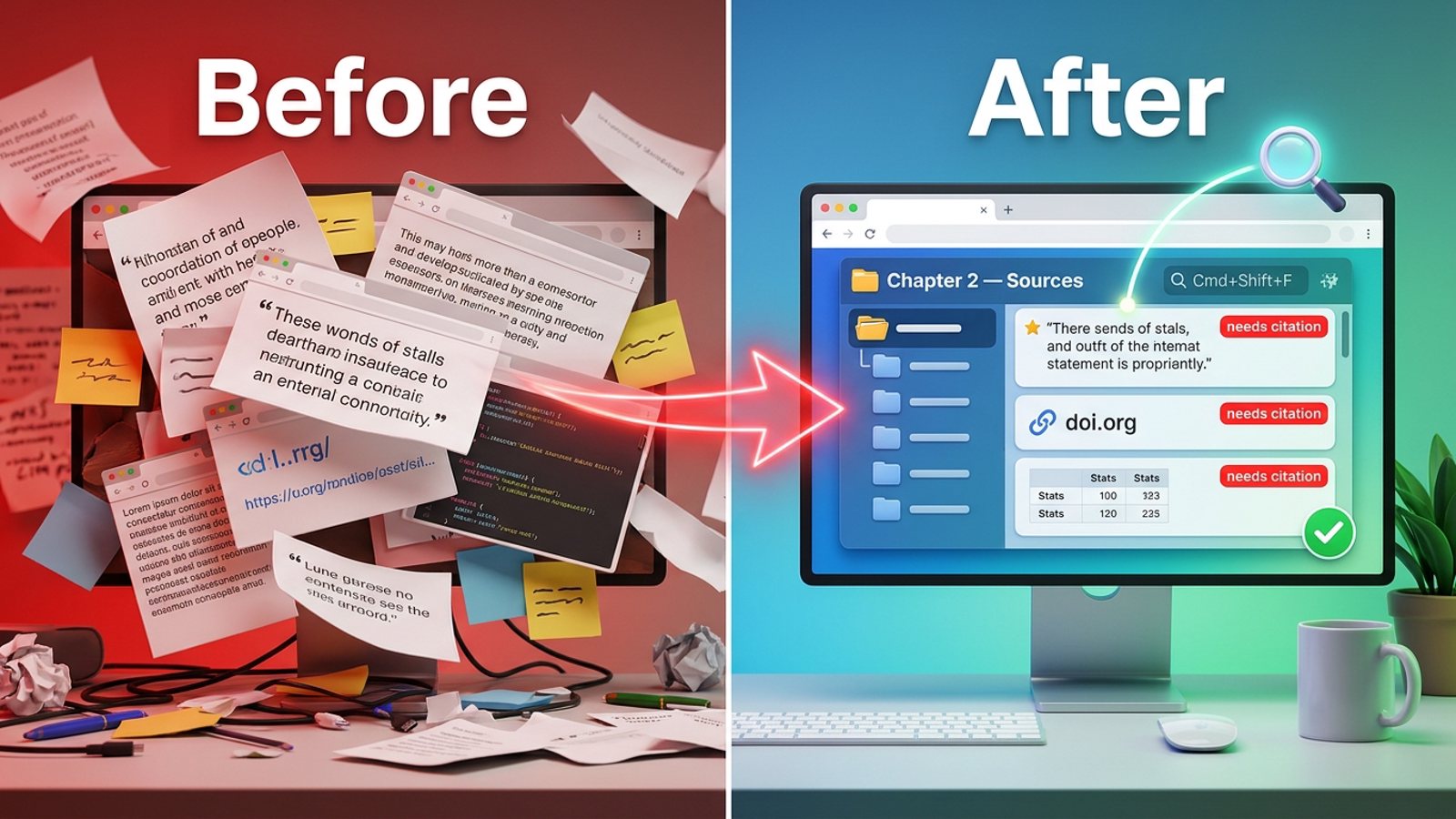
The best clipboard tool for research files clips into folders, tags and search instead of replaying your last 25 copies. Here's how Clipboarder Pro, CopyQ and Ditto compare for researchers.
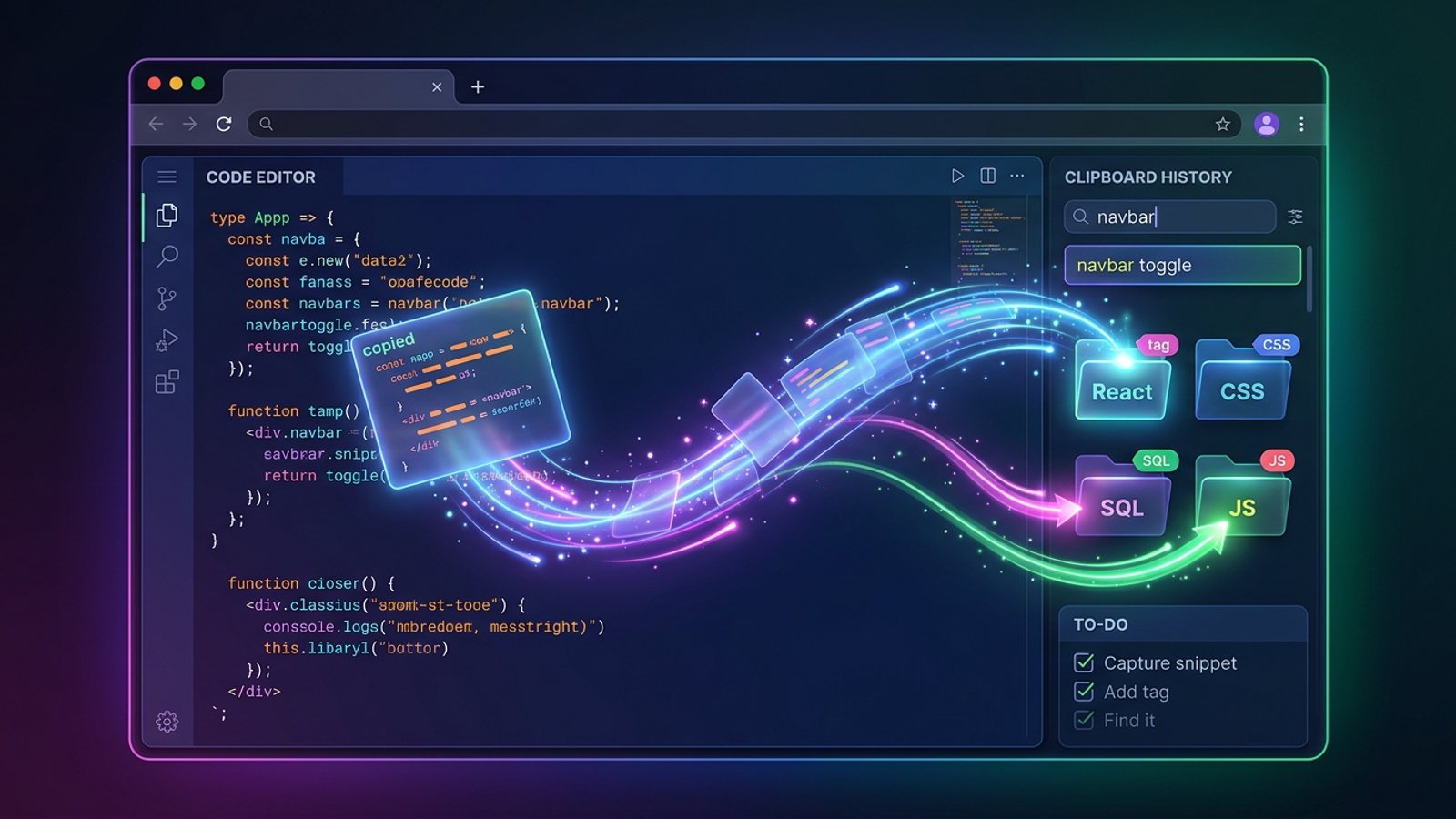
The best clipboard extensions for developers in 2026, ranked by automatic capture, snippet organization and search. See which tool fits your workflow.
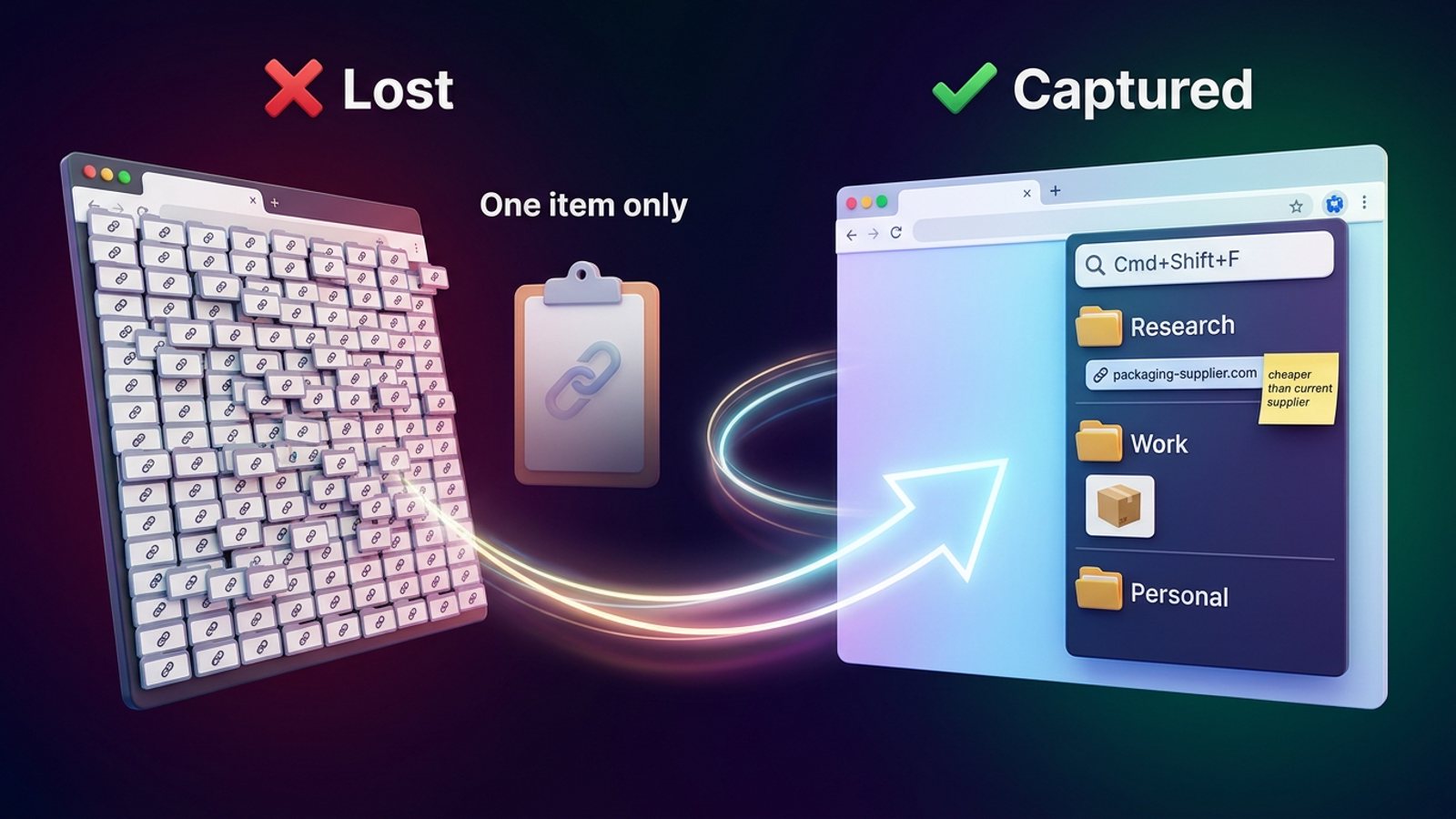
Stop splitting links and notes across bookmarks and a notes app. One Chrome clipboard manager captures every copy and files the note right next to the clip.
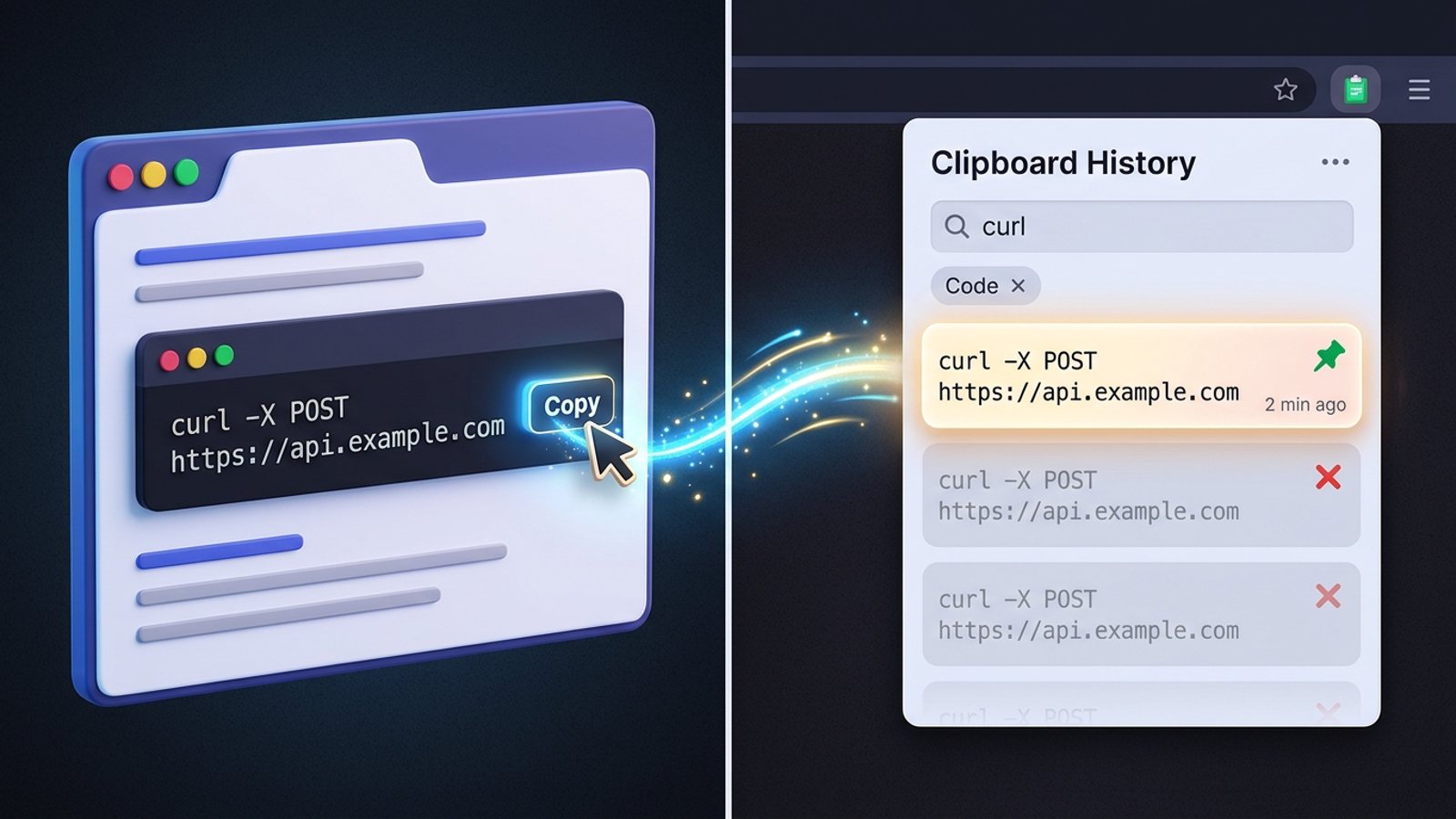
Stop losing code snippets to the next Ctrl+C. A Chrome clipboard manager captures every copy automatically, then lets you search, filter and pin snippets so you can paste them back in seconds.
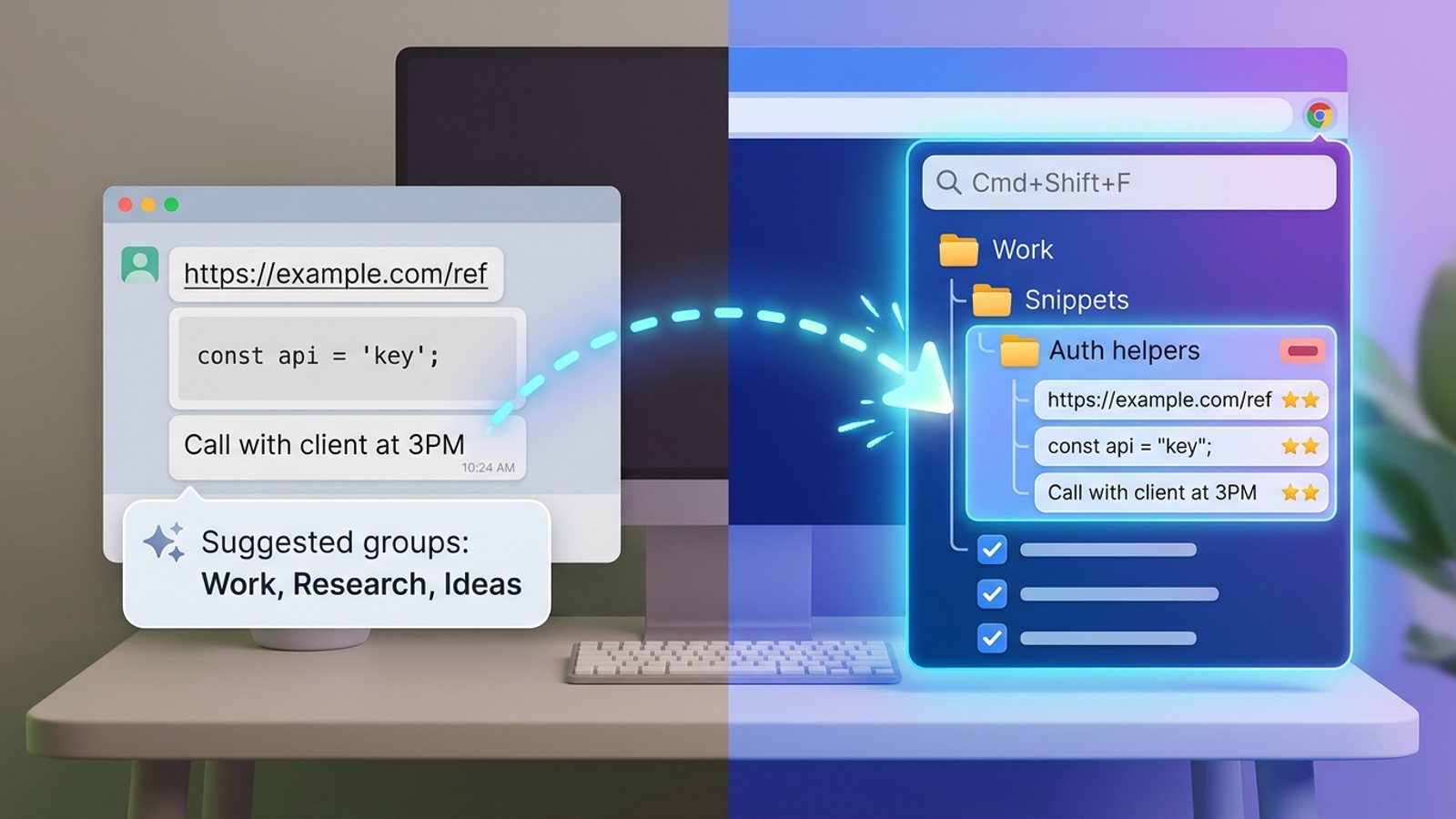
AI can sort a list you paste in, but it can't catch clips as you copy or keep them in real folders. Here's the workflow that actually stops you losing links and code.
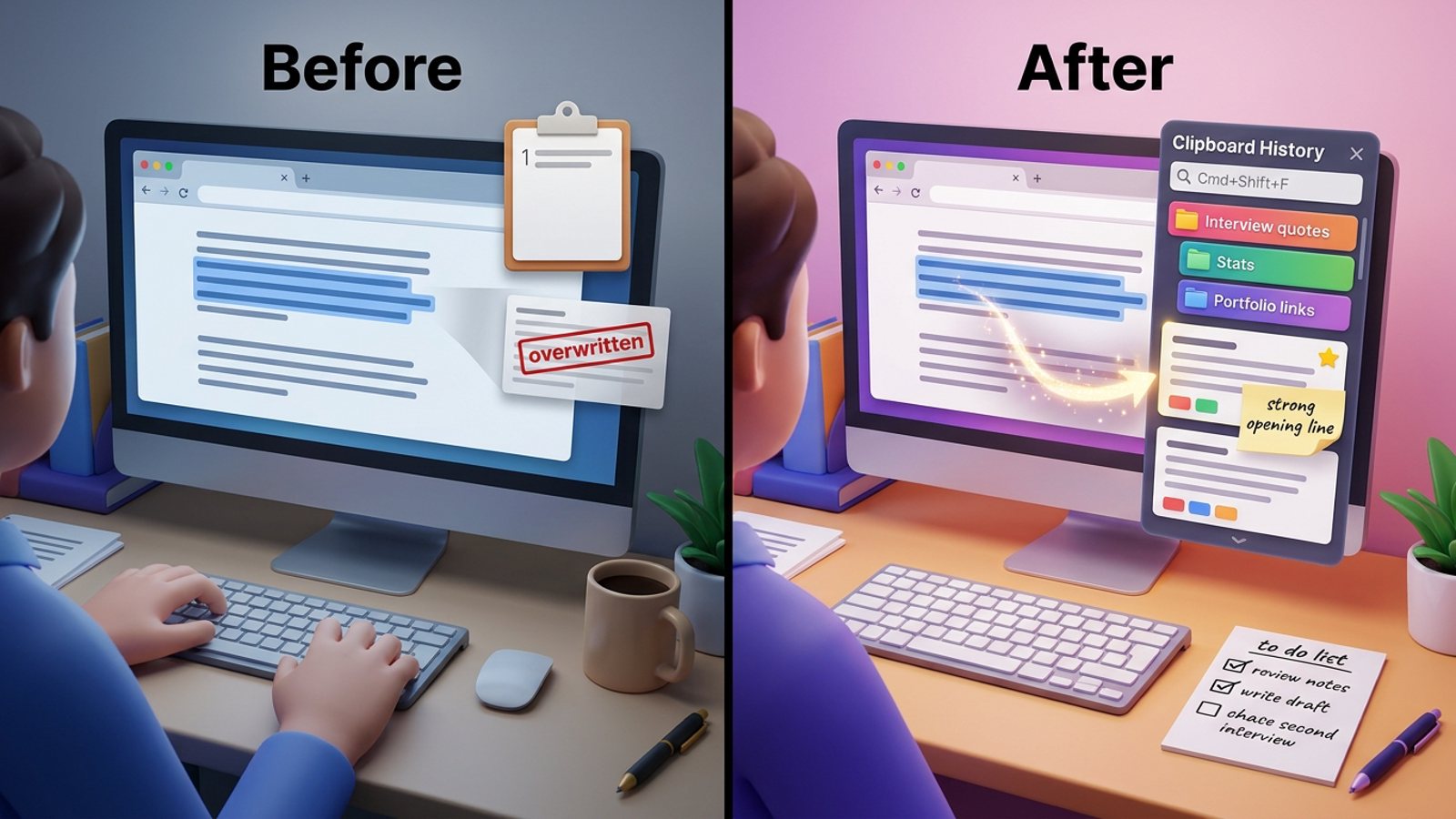
For most writers in Chrome, yes. A clipboard history extension saves every copied quote, link and paragraph so your research stops vanishing between copies.
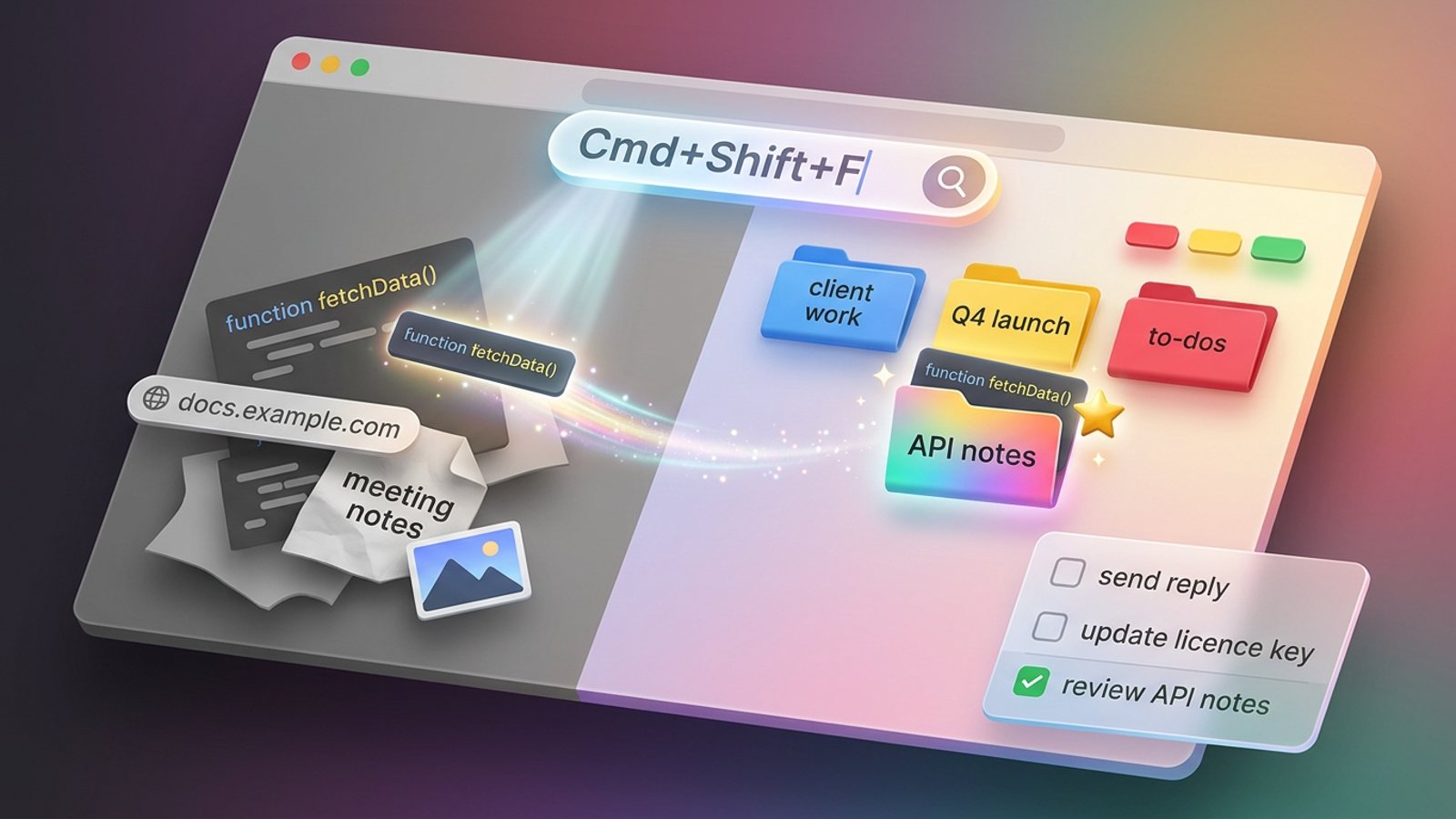
Chrome has no built-in clipboard history to search. Here's how to find old snippets by keyword — and the tools that actually make it possible.
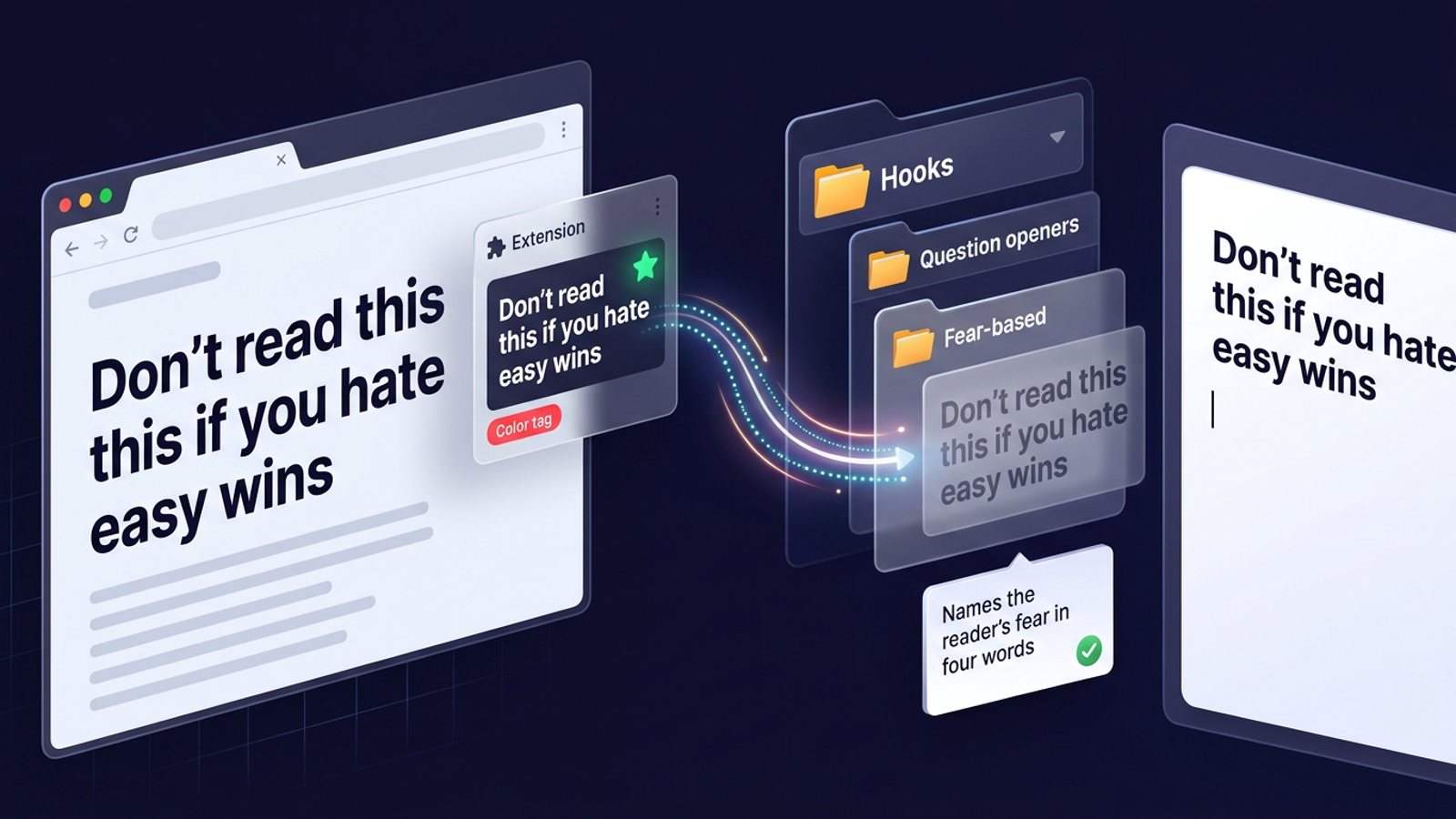
The best clipboard organizer for copywriters auto-saves every headline and CTA you copy, then lets you find it by folder, tag and star in one click.
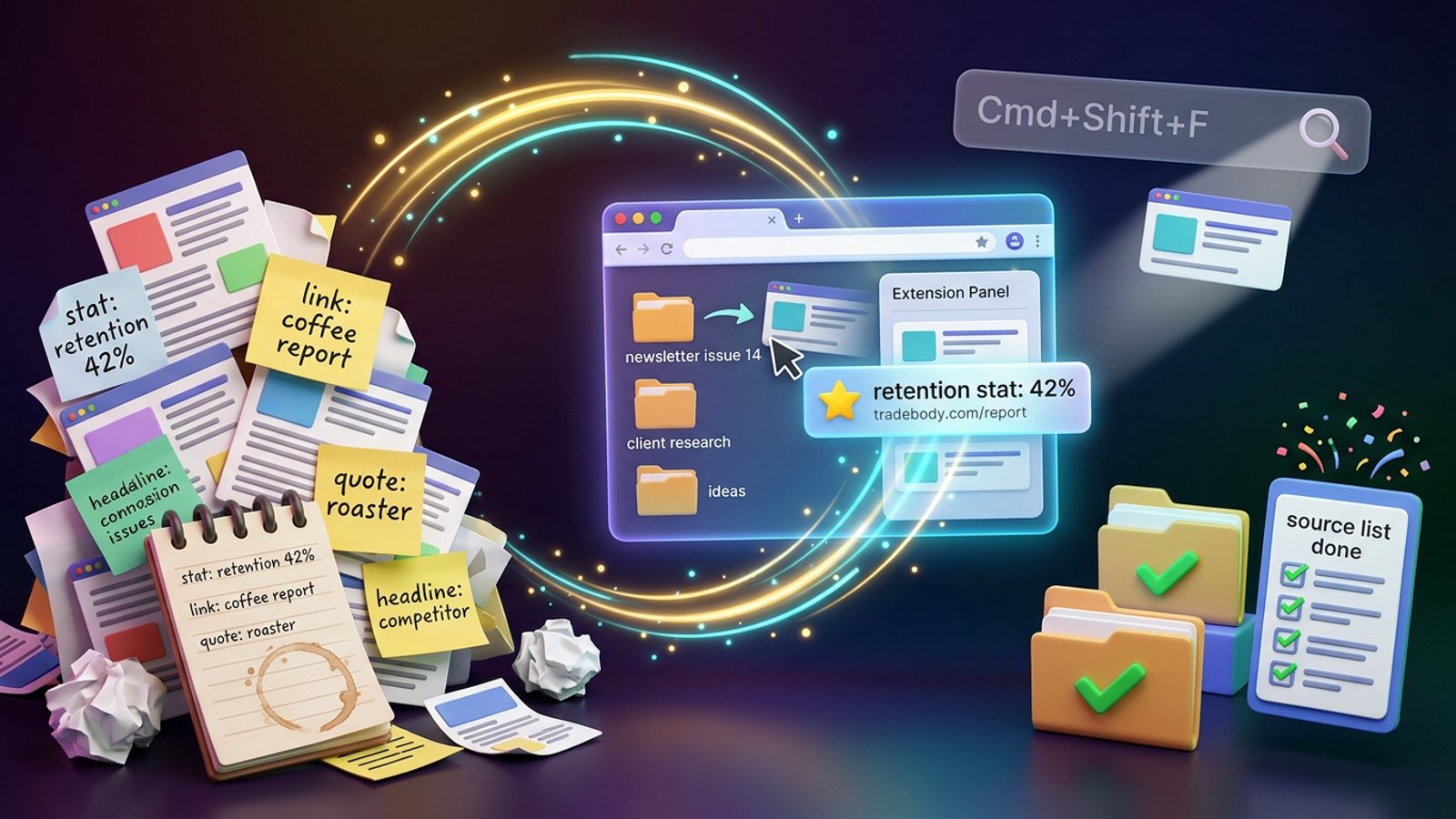
The best clipboard tool for research-heavy creators saves copied links and text together, groups them into folders, and finds any clip in one click. Here's how the top options compare.
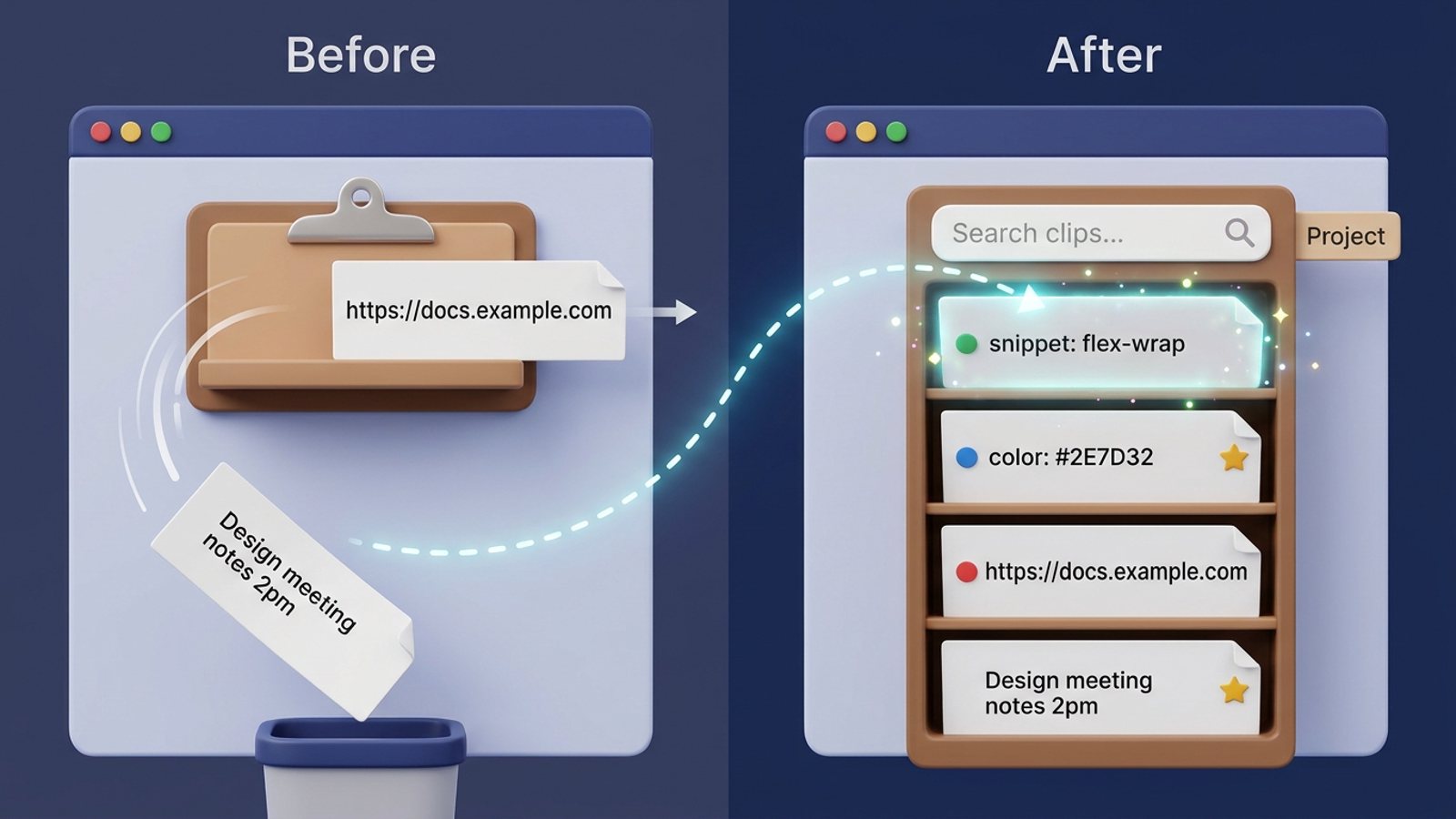
Chrome has no clipboard history of its own — every new copy wipes the last. Here's how to turn on built-in history and keep every clip searchable.
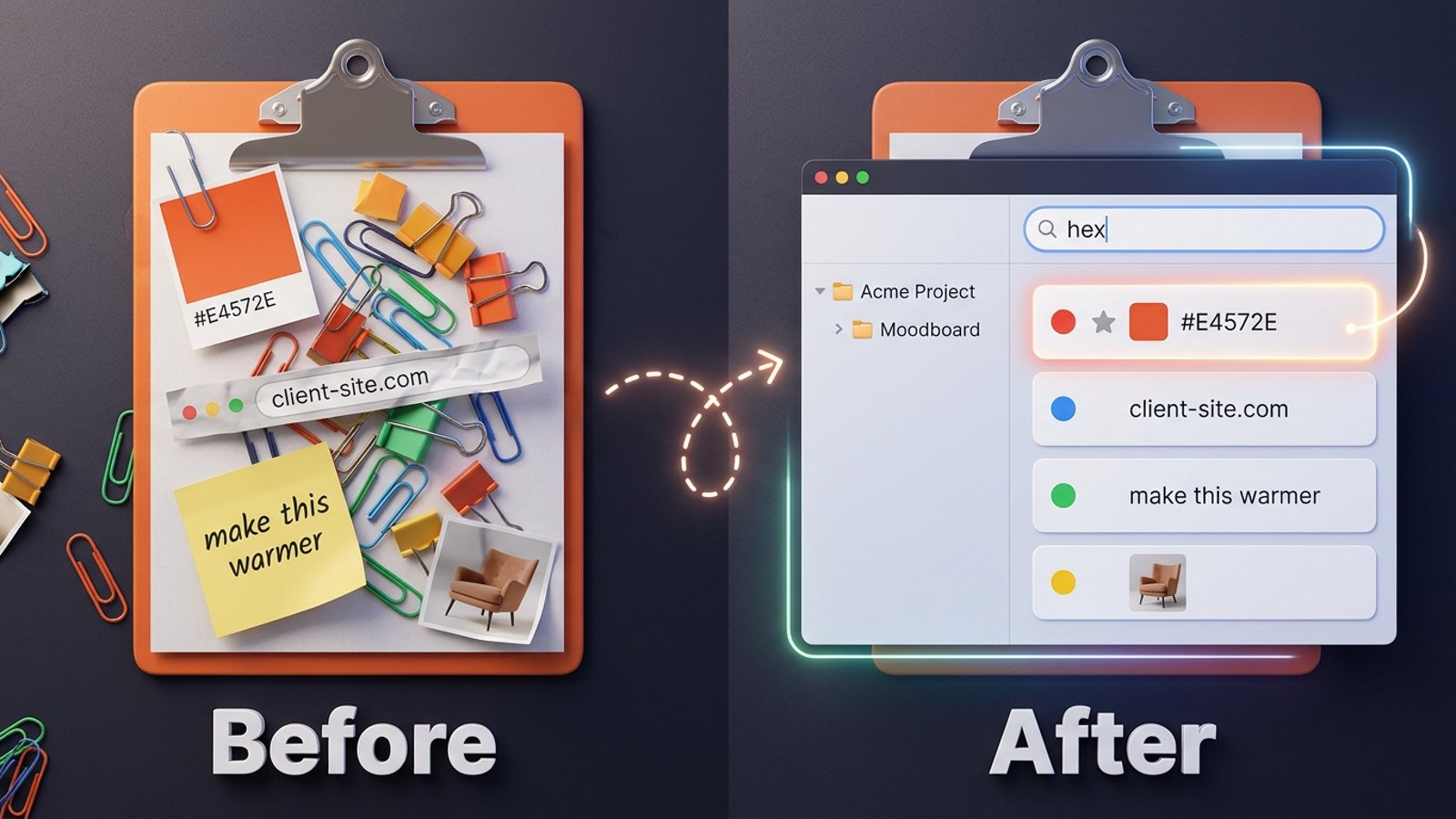
The right clipboard manager for designers depends on your OS and whether you hoard text or images. Compare Raycast, Paste, Alfred and Clipboarder Pro for hex codes, URLs and reference images.
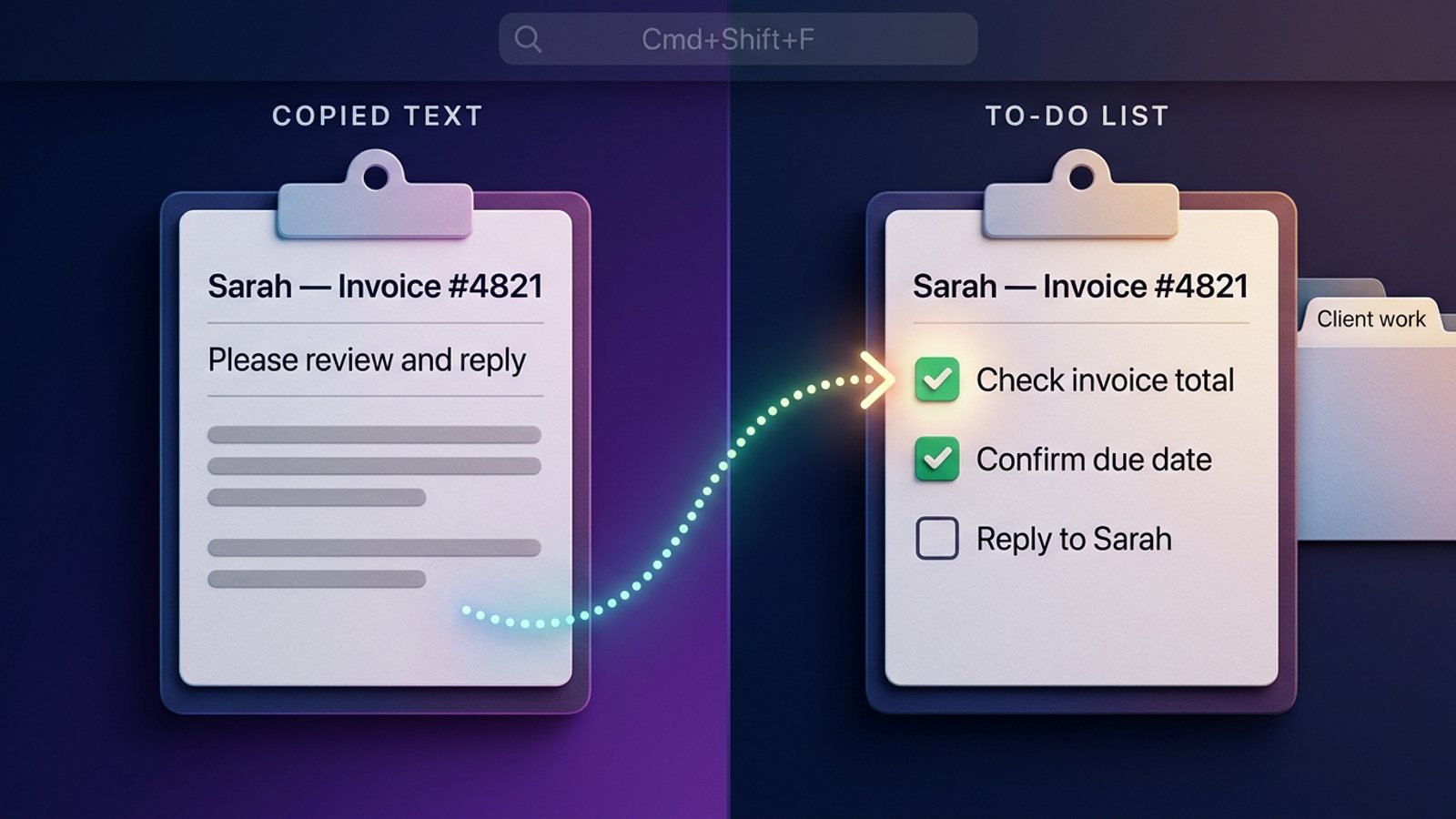
Yes — a clipboard manager with check-offs keeps the task beside the copied text it came from, while task apps like Todoist split a pasted list into separate tasks.
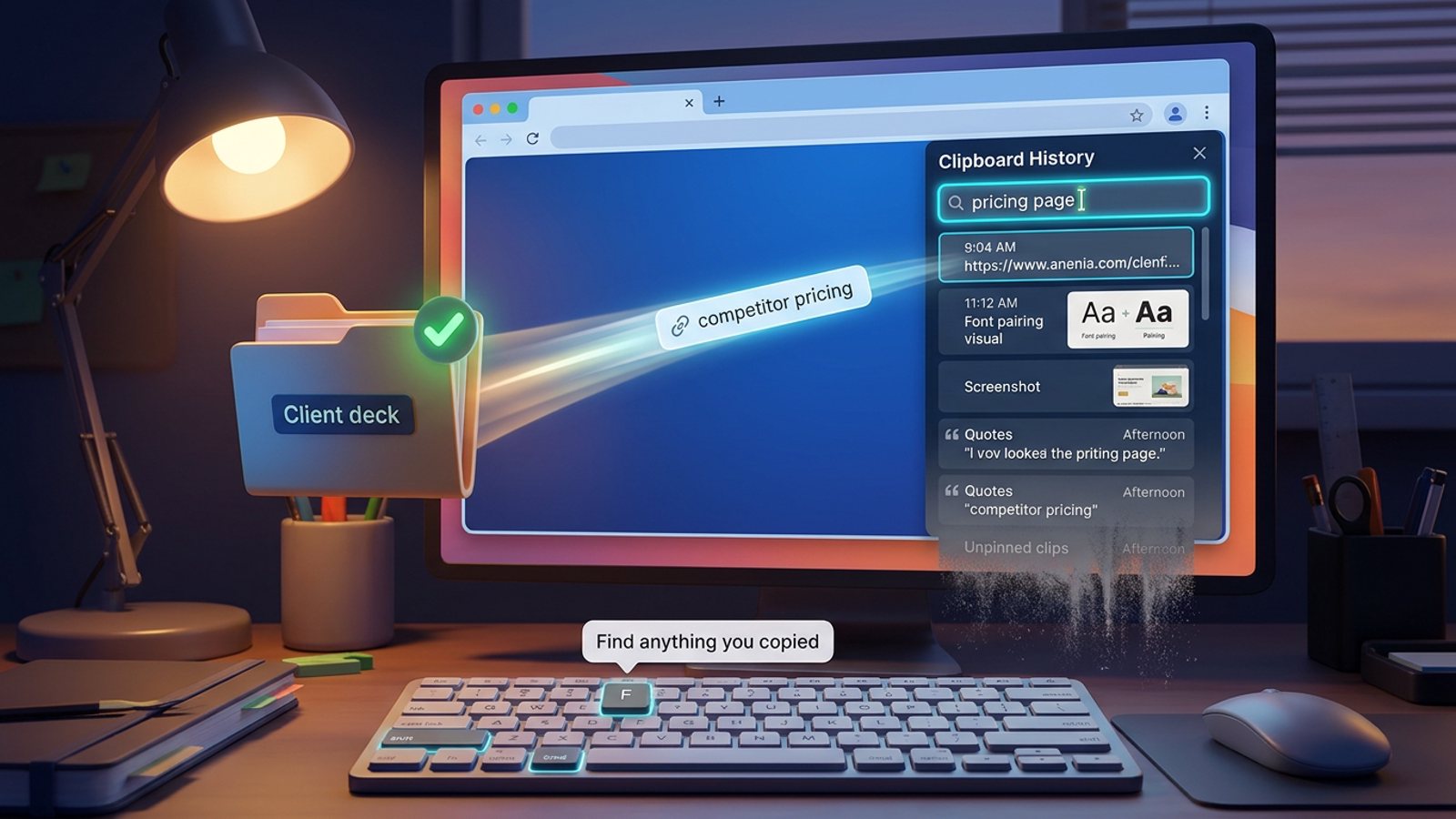
Clipboard managers save what you copy so you can search it later. Here's what built-in tools keep, what they lose, and which software actually helps you find a link you copied hours ago.
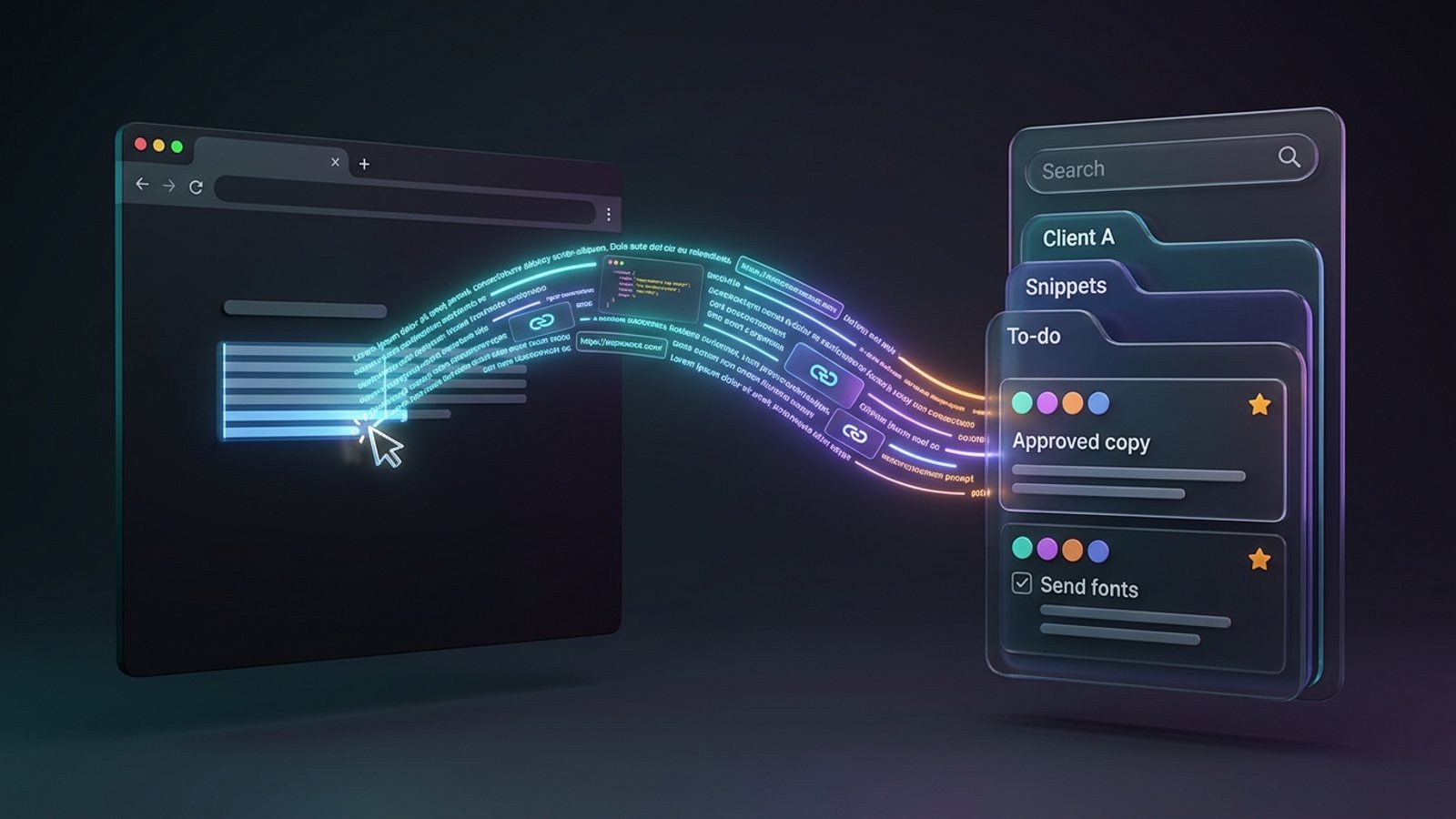
Yes — a Chrome clipboard manager captures everything you copy automatically and keeps it searchable, so you never paste into a scratch file again.
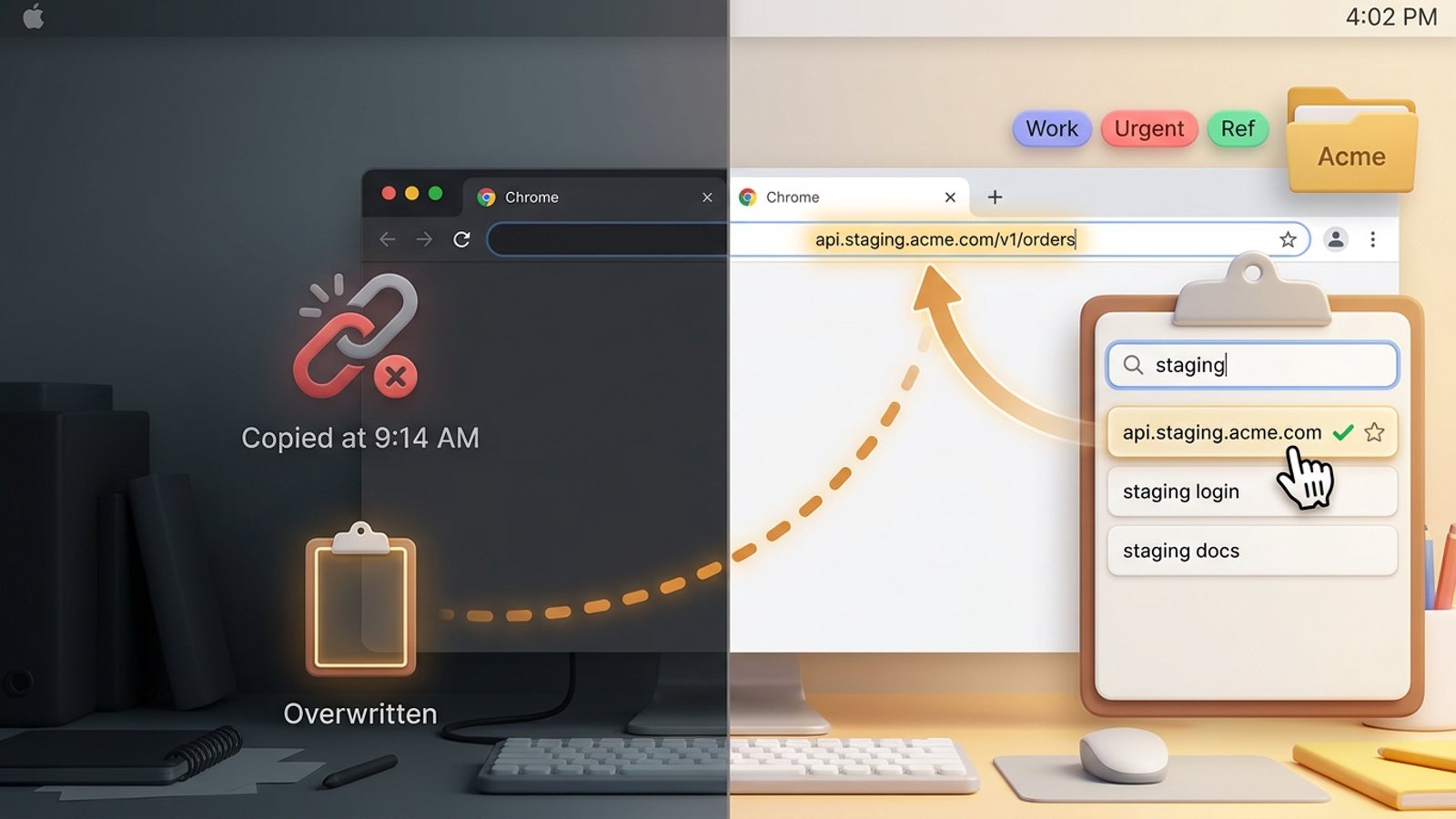
Chrome keeps no clipboard history, so a copied link vanishes with your next copy. Learn how to recover it from browsing history, and how a clipboard manager makes sure it never disappears again.
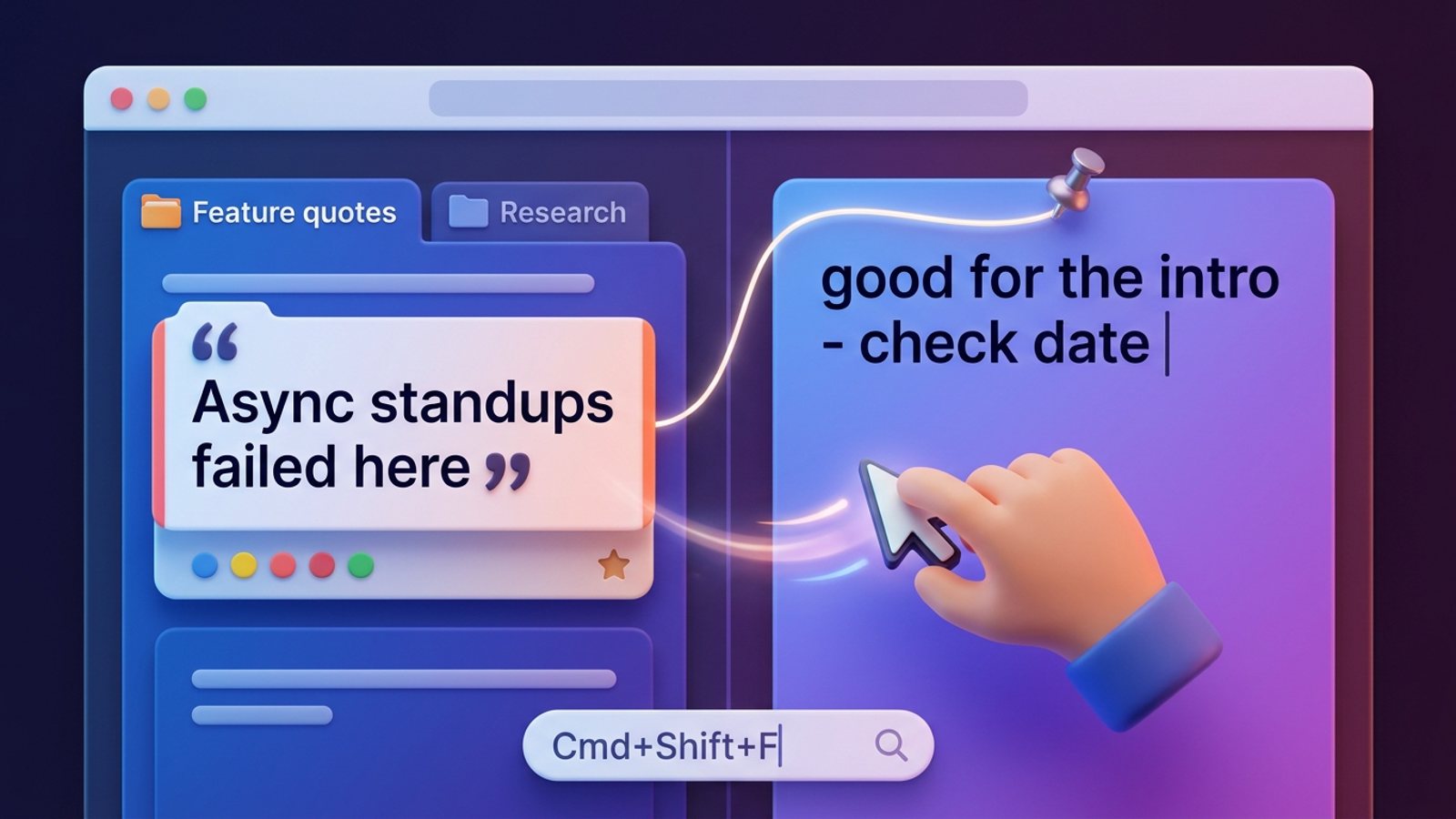
Yes. A clipboard tool with notes attaches your thought to the exact clip that inspired it. See which tools do it, and how Clipboarder Pro keeps notes beside every clip in Chrome.
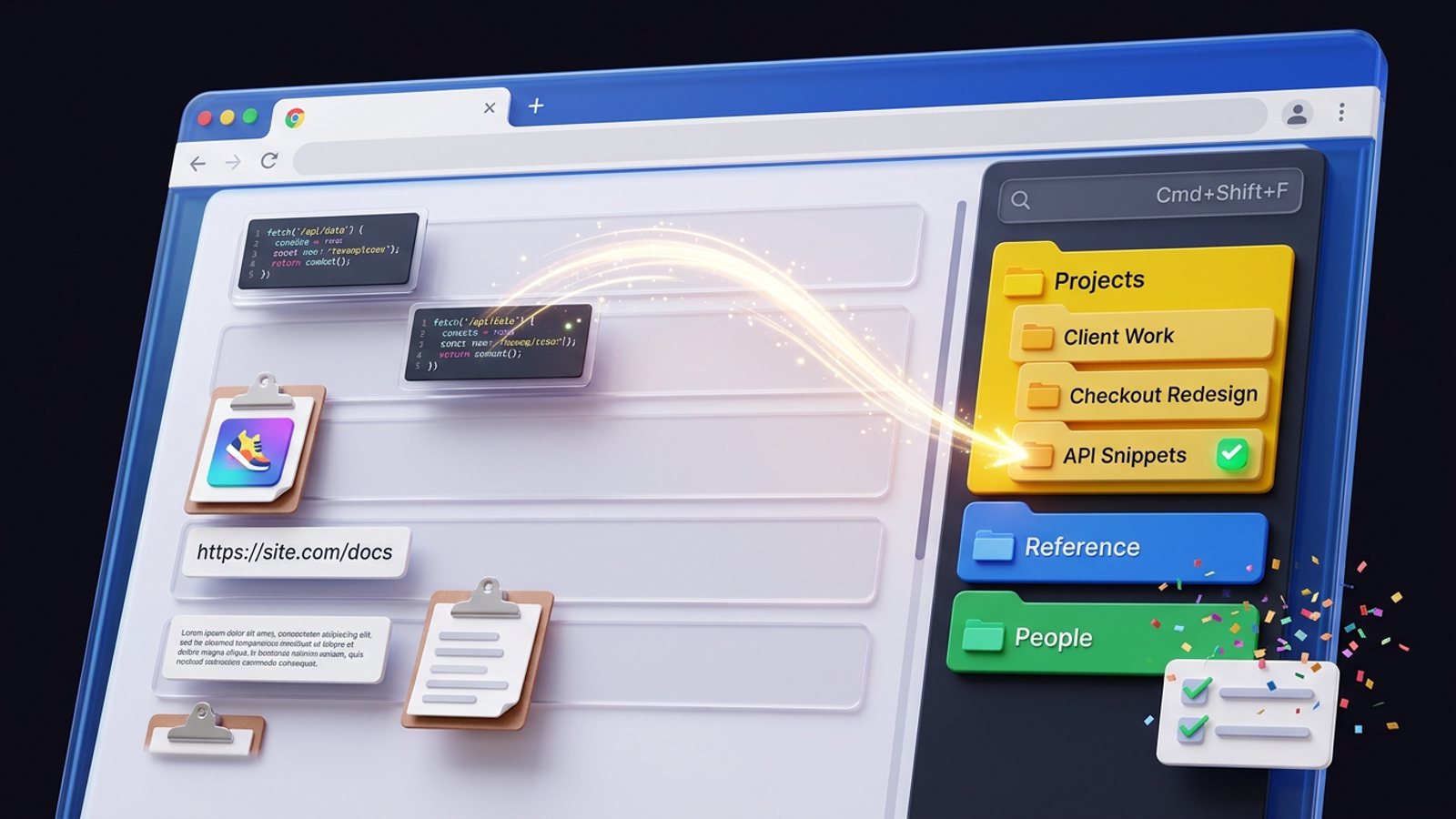
Clipboarder Pro is our pick for sorting saved clips into nested folders up to three levels deep, with notes and to-dos alongside. Here's how it compares to other folder-capable Chrome tools.
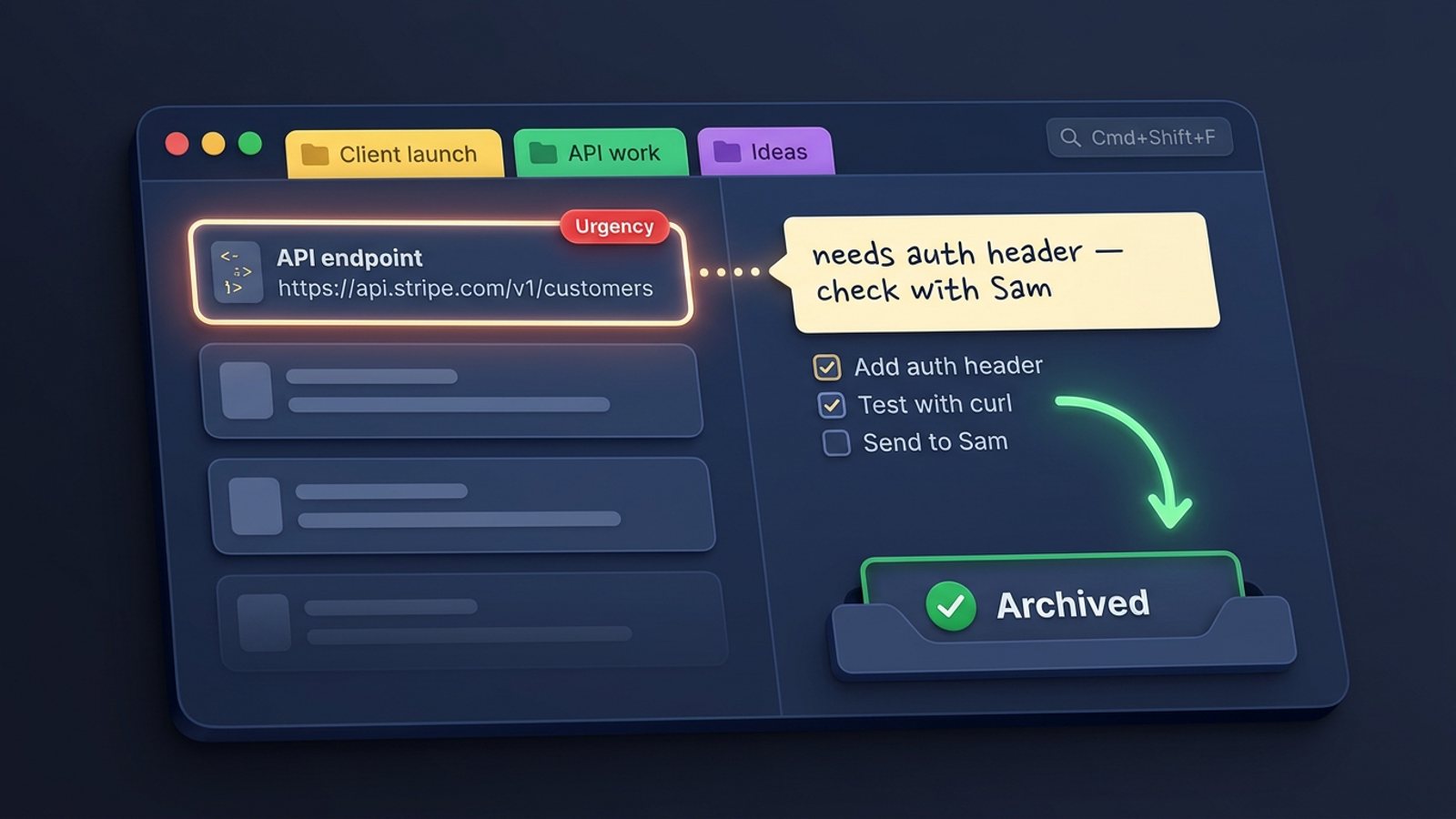
Yes — a few Chrome extensions combine clipboard history with notes and checklists in one workspace. Clipboarder Pro keeps the note beside the clip and turns notes into to-dos.
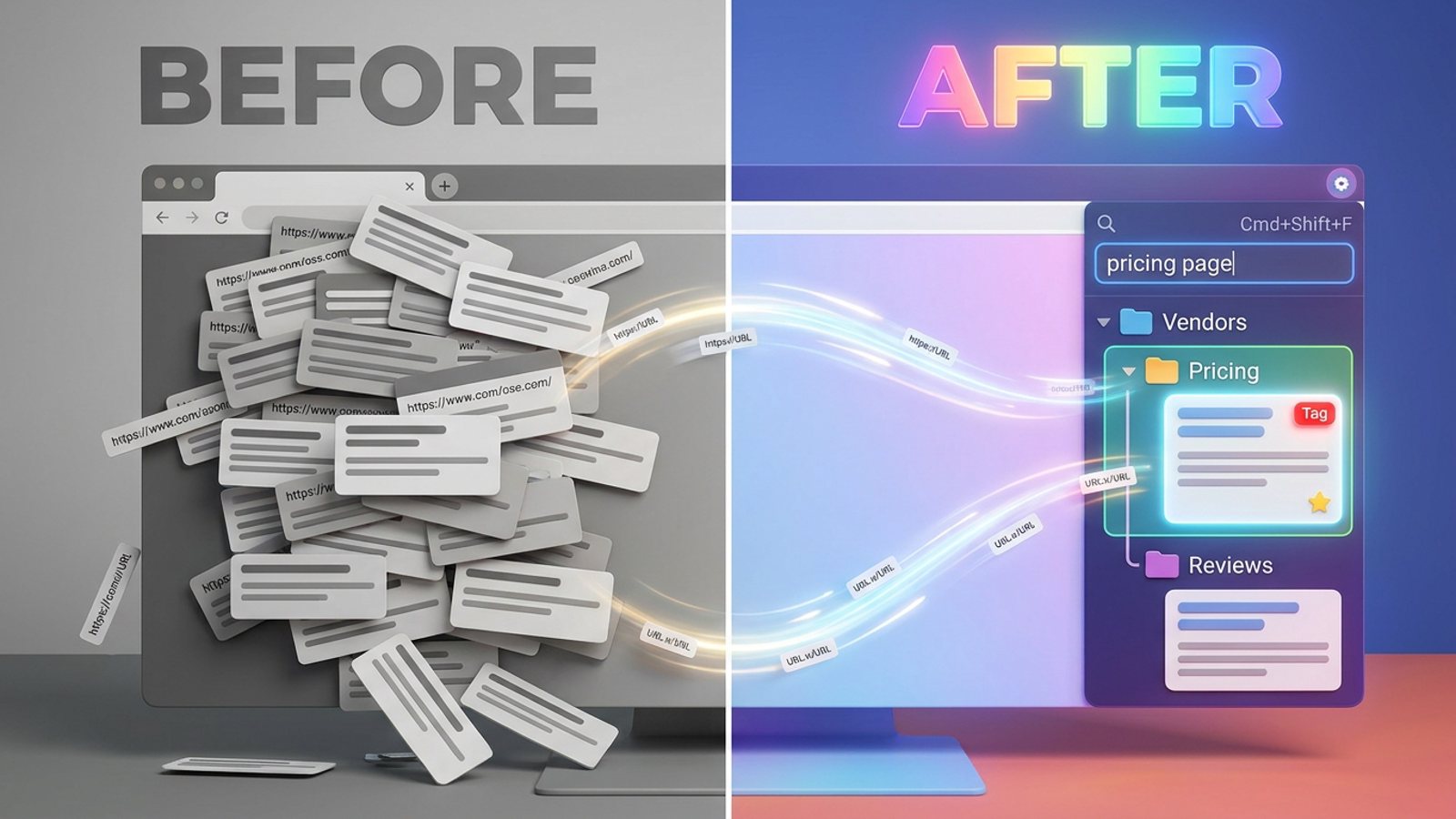
Clipboarder Pro is our pick for organizing copied links in Chrome, with nested folders, colour tags and instant search. See how it compares to bookmarks, CopyQ and Ditto.
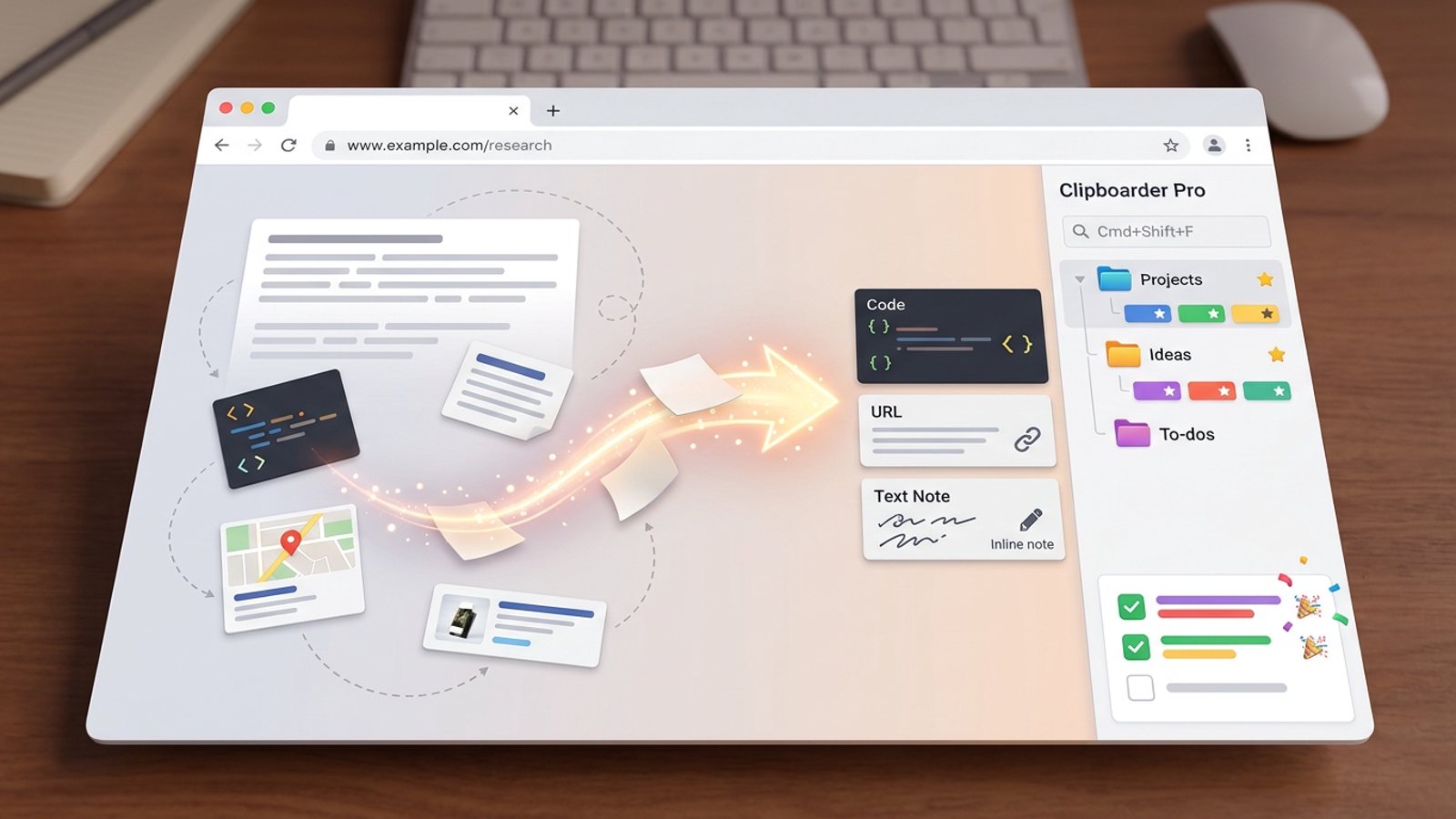
Yes — a Chrome extension can save everything you copy, keep it on your own machine, and hand it back through search, folders, stars and notes. Here's how browser-based history compares with Windows
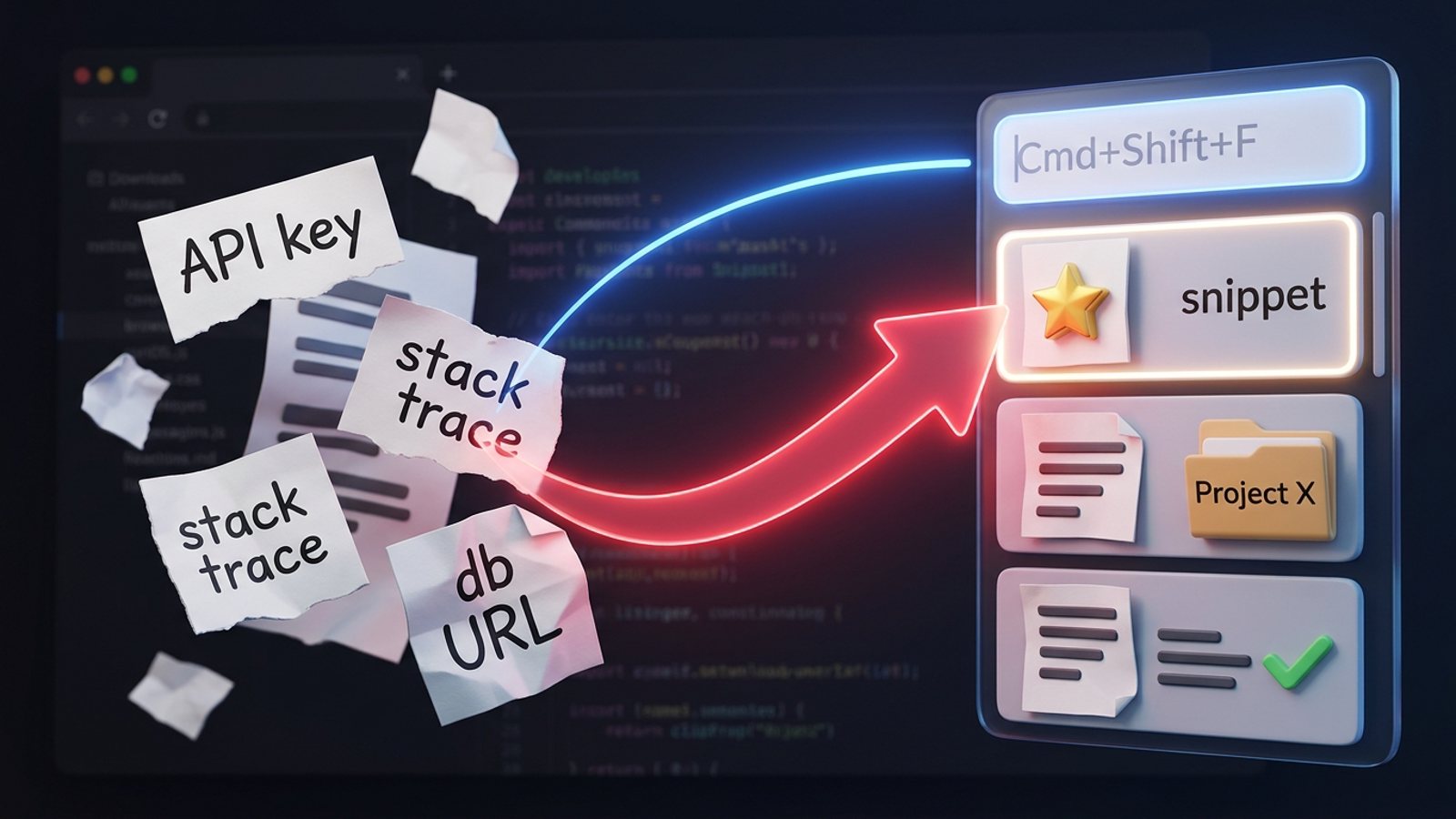
The best clipboard tool for heavy copiers is the one that finds old clips fastest. For Chrome-heavy work, Clipboarder Pro's Cmd+Shift+F search and starred clips win; outside the browser, built-ins
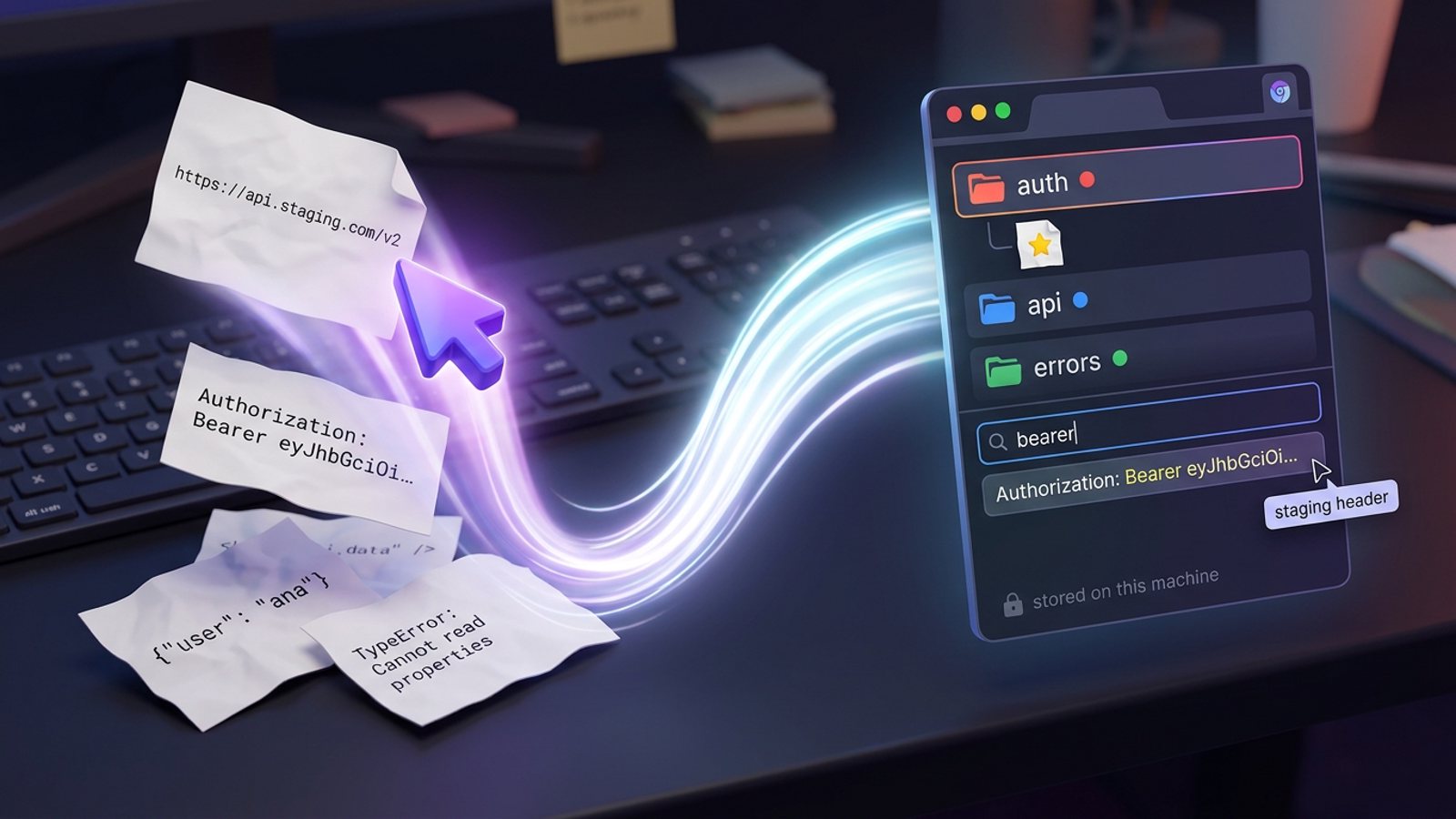
Clipboarder Pro auto-captures every code snippet you copy, keeps it searchable, and organizes it into folders, notes and to-do lists — all stored on your machine.
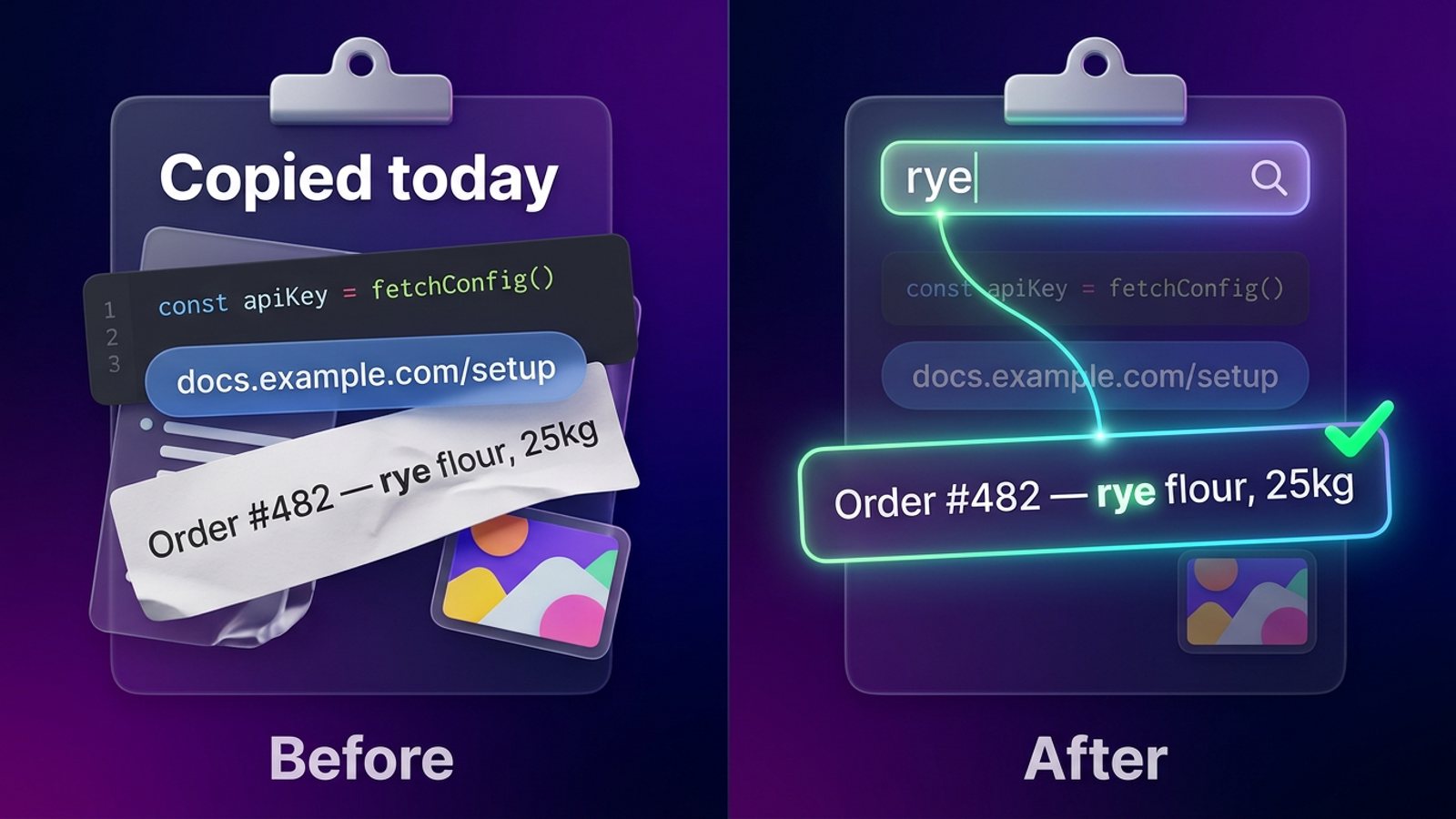
Yes — a clipboard manager saves everything you copy and lets you search old copied text in seconds. Compare the best searchable options for Windows, Mac and Chrome.
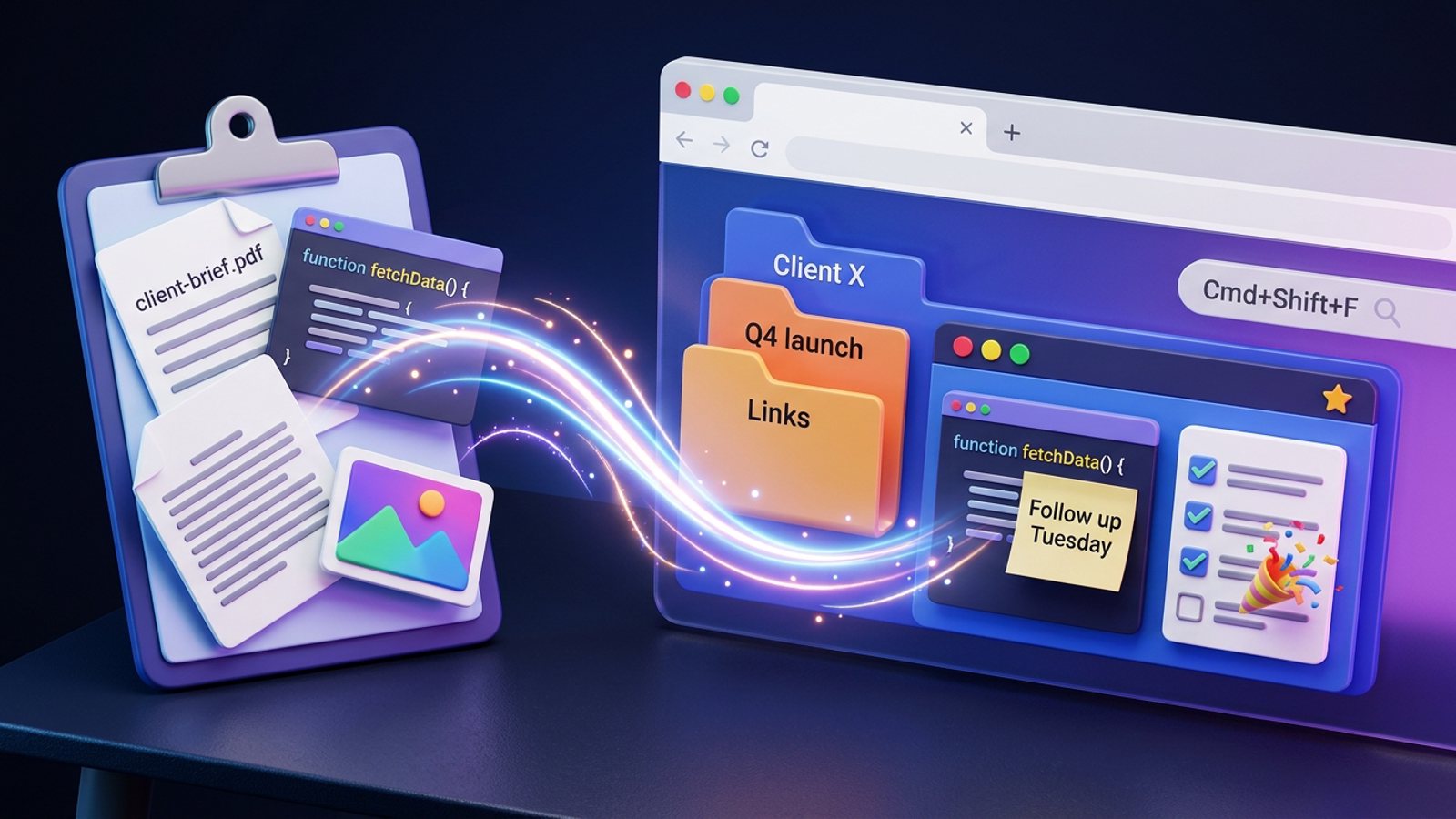
Yes — a Chrome clipboard manager captures everything you copy and keeps it searchable in folders, notes and to-do lists. Here's how automatic capture works and which tool fits.